Showing posts with label John Paul II. Show all posts

Wednesday, June 17, 2020

Human Life and the Obligation of Conscience

Sophie Scholl and the White Rose confronted the great evil that was National Socialism.

Despite the cries of "never again" after World War II, there are some who seem to think that Hitler and the Nazis so epitomized evil that if a situation does not rise to the level of exterminating six million Jews and millions of others, then it is not really so great an evil. As such, they acquiesce in any number of horrors and "never again" becomes "once again" because, although we might not live in a totalitarian regime such as Nazi Germany, as has been said here repeatedly, there are other evils in the world, other attacks on the inherent dignity of the human person.

What are these "other evils"?

Among other things, practically the entirety of what was a few years ago called the "New Biology," from frozen embryos to embryo-killing stem cell research to other embryo and fetal experimentation to attempted human cloning to organ harvesting to baby selling to the medicalized "aid in dying" of euthanasia, assisted suicide, and withholding of care, to eugenics to, of course, abortion, including abortifacient pills (falsely called emergency "contraception") and that species of death which nearly fully delivers the baby before jamming a pair of pointed scissors into the baby's skull and sucking her brains out to collapse the head, which, as gruesome as that is, still nevertheless leaves militant advocates for abortion. All of these, and more, contribute to a culture of death -- death not only of the physical body, but death of conscience and death of the soul, and eventually death of society itself.

At one point in time, they were all recognized for the immoral and evil attacks on the sanctity of life that they are (especially since many of these things were pursued under that same Nazi Germany that perpetrated the Holocaust - Rudolph Hess said in 1934 that "National Socialism is nothing but applied biology"). But no longer. Today's bioethics fully embraces as virtuous that which was rejected yesterday as reprehensible. Today's bioethics experts
"produce evermore sophisticated rationalizations for turning the unthinkable into the routinely doable. The prohibited becomes the permissible becomes the expected. 'But that would be murder!' is an objection that loses its force the second time around." (Richard John Neuhaus, "The War Against Reason," National Review, Dec. 18, 1987)
However, despite the imprimatur given by bioethics "experts," despite the legal approval of judges and legislators and politicians, there is a higher law than their utilitarianism, than their law of the supremacy of the will. That higher law, which is knowable to all by reason and good conscience, is objective moral truth, including the inalienable diginity of the human person -- that all human beings are inherently equal and entitled to be respected as persons, subjects, and ends in themselves, and not as things, objects, means, or resources to be manipulated by others, regardless of stage of development, cognitive ability, "quality of life," or contribution to society.

Unfortunately, sense of the higher law has been largely lost by our legal system because sense of transcendental Truth has been ignored in favor of a utilitarianism, enforced and protected by positive human "law," that appeals to the will and considers truth and human life to be merely values to be weighed in the equation of what adds or subtracts from another's pleasure. But the unjust statutory and judicial "law" decreeing the wholesale violation of fundamental human dignity is no law at all. And we have a duty under the higher law, as a matter of good conscience, to oppose and resist the evils of today: the attacks, in thought and deed, on the instrinsic dignity, value, and sanctity of human life.

Evangelium Vitae
Blessed Pope John Paul II
21. When the sense of God is lost, there is also a tendency to lose the sense of man, of his dignity and his life; in turn, the systematic violation of the moral law, especially in the serious matter of respect for human life and its dignity, produces a kind of progressive darkening of the capacity to discern God's living and saving presence. . . .

23. The criterion of personal dignity -- which demands respect, generosity and service -- is replaced by the criterion of efficiency, functionality and usefulness: others are considered not for what they "are," but for what they "have, do and produce." This is the supremacy of the strong over the weak.

24. It is at the heart of the moral conscience that the eclipse of the sense of God and of man, with all its various and deadly consequences for life, is taking place. It is a question, above all, of the individual conscience, as it stands before God in its singleness and uniqueness. But it is also a question, in a certain sense, of the "moral conscience" of society: in a way it too is responsible, not only because it tolerates or fosters behavior contrary to life, but also because it encourages the "culture of death," creating and consolidating actual "structures of sin" which go against life.

The moral conscience, both individual and social, is today subjected, also as a result of the penetrating influence of the media, to an extremely serious and mortal danger: that of confusion between good and evil, precisely in relation to the fundamental right to life. A large part of contemporary society looks sadly like that humanity which Paul describes in his Letter to the Romans. It is composed "of men who by their wickedness suppress the truth" (1:18): having denied God and believing that they can build the earthly city without him, "they became futile in their thinking" so that "their senseless minds were darkened" (1:21); "claiming to be wise, they became fools" (1:22), carrying out works deserving of death, and "they not only do them but approve those who practice them" (1:32).

When conscience, this bright lamp of the soul (cf. Mt 6:22-23), calls "evil good and good evil" (Is 5:20), it is already on the path to the most alarming corruption and the darkest moral blindness. . . .

28. This situation, with its lights and shadows, ought to make us all fully aware that we are facing an enormous and dramatic clash between good and evil, death and life, the "culture of death" and the "culture of life." We find ourselves not only "faced with" but necessarily "in the midst of" this conflict: we are all involved and we all share in it, with the inescapable responsibility of choosing to be unconditionally pro-life. . . .

Nothing helps us so much to face positively the conflict between death and life in which we are engaged as faith in the Son of God who became man and dwelt among men so "that they may have life, and have it abundantly" (Jn 10:10). It is a matter of faith in the Risen Lord, who has conquered death; faith in the blood of Christ "that speaks more graciously than the blood of Abel" (Heb 12:24). . . .

71. Certainly the purpose of civil law is different and more limited in scope than that of the moral law. But "in no sphere of life can the civil law take the place of conscience or dictate norms concerning things which are outside its competence," which is that of ensuring the common good of people through the recognition and defense of their fundamental rights, and the promotion of peace and of public morality.

The real purpose of civil law is to guarantee an ordered social coexistence in true justice, so that all may "lead a quiet and peaceable life, godly and respectful in every way" (1 Tim 2:2). Precisely for this reason, civil law must ensure that all members of society enjoy respect for certain fundamental rights which innately belong to the person, rights which every positive law must recognize and guarantee. First and fundamental among these is the inviolable right to life of every innocent human being. . . .

In the Encyclical Pacem in Terris, John XXIII pointed out that
"it is generally accepted today that the common good is best safeguarded when personal rights and duties are guaranteed. The chief concern of civil authorities must therefore be to ensure that these rights are recognized, respected, co-ordinated, defended and promoted, and that each individual is enabled to perform his duties more easily. For ‘to safeguard the inviolable rights of the human person, and to facilitate the performance of his duties, is the principal duty of every public authority.’ Thus any government which refused to recognize human rights or acted in violation of them, would not only fail in its duty; its decrees would be wholly lacking in binding force."
72. The doctrine on the necessary conformity of civil law with the moral law is in continuity with the whole tradition of the Church. This is clear once more from John XXIII's Encyclical:
"Authority is a postulate of the moral order and derives from God. Consequently, laws and decrees enacted in contravention of the moral order, and hence of the divine will, can have no binding force in conscience...; indeed, the passing of such laws undermines the very nature of authority and results in shameful abuse."
This is the clear teaching of Saint Thomas Aquinas, who writes that
"human law is law inasmuch as it is in conformity with right reason and thus derives from the eternal law. But when a law is contrary to reason, it is called an unjust law; but in this case it ceases to be a law and becomes instead an act of violence."
And again:
"Every law made by man can be called a law insofar as it derives from the natural law. But if it is somehow opposed to the natural law, then it is not really a law but rather a corruption of the law."
Now the first and most immediate application of this teaching concerns a human law which disregards the fundamental right and source of all other rights which is the right to life, a right belonging to every individual. . . . Disregard for the right to life, precisely because it leads to the killing of the person whom society exists to serve, is what most directly conflicts with the possibility of achieving the common good. . . .

74. The passing of unjust laws often raises difficult problems of conscience for morally upright people with regard to the issue of cooperation, since they have a right to demand not to be forced to take part in morally evil actions.

Sometimes the choices which have to be made are difficult; they may require the sacrifice of prestigious professional positions or the relinquishing of reasonable hopes of career advancement. In other cases, it can happen that carrying out certain actions, which are provided for by legislation that overall is unjust, but which in themselves are indifferent, or even positive, can serve to protect human lives under threat. There may be reason to fear, however, that willingness to carry out such actions will not only cause scandal and weaken the necessary opposition to attacks on life, but will gradually lead to further capitulation to a mentality of permissiveness.

In order to shed light on this difficult question, it is necessary to recall the general principles concerning cooperation in evil actions. Christians, like all people of good will, are called upon under grave obligation of conscience not to cooperate formally in practices which, even if permitted by civil legislation, are contrary to God's law.

Indeed, from the moral standpoint, it is never licit to cooperate formally in evil. Such cooperation occurs when an action, either by its very nature or by the form it takes in a concrete situation, can be defined as a direct participation in an act against innocent human life or a sharing in the immoral intention of the person committing it. This cooperation can never be justified either by invoking respect for the freedom of others or by appealing to the fact that civil law permits it or requires it. Each individual in fact has moral responsibility for the acts which he personally performs; no one can be exempted from this responsibility, and on the basis of it everyone will be judged by God himself (cf. Rom 2:6; 14:12).

To refuse to take part in committing an injustice is not only a moral duty; it is also a basic human right. Were this not so, the human person would be forced to perform an action intrinsically incompatible with human dignity, and in this way human freedom itself, the authentic meaning and purpose of which are found in its orientation to the true and the good, would be radically compromised. What is at stake therefore is an essential right which, precisely as such, should be acknowledged and protected by civil law.
.

Tuesday, April 2, 2013

Blessed Pope John Paul II


Blessed Pope John Paul II, pray for us, as we implore the other saints to pray for you.

Thursday, November 1, 2012

All Saints' Day

Throughout the liturgical year, the Church observes feast days for the various saints individually. We celebrate today the Solemnity of All Saints, a Holy Day of "Obligation," rejoicing in the Lord with a festival in honor of the entire multitude of the faithful who now live with and in Him in heaven, including the canonized saints and those whose names are known only to God.

In our previous post at Adoramus Te, the blog of Blessed Sacrament Catholic Church, Santo Subito: Answering the Call to be a Saint, we discussed the universal call to holiness, how we are all called to be a saint. Many people resist this call, believing it to be a great burden, a cumbersome obligation that they are not at all comfortable with. Sure, they would like to go to heaven -- and they expect that they will go to heaven -- but they are rather hesitant to fully embrace the holy life now or even aspire to it; they fully expect to receive God's grace of salvation at the end, even if they are not all that enamored of seeking and accepting His grace now. They believe that the road to sainthood will be too arduous and difficult and deprive them of their freedom.

But the call to sainthood is neither a burden nor a cumbersome obligation. Rather, it is a call to set down one's burdens and to embrace authentic freedom. The call to sainthood is nothing other than a call to be true to the person that you were made to be, one who loves God and others in truth.
Sometimes, people think that holiness is a privileged condition reserved for the few elect. Actually, becoming holy is every Christian's task, indeed, we could say, every person's! The Apostle writes that God has always blessed us and has chosen us in Christ "that we should be holy and blameless before him...in love" (Eph 1:3-5). All human beings are therefore called to holiness, which ultimately consists in living as children of God, in that "likeness" with him in accordance with which they were created. All human beings are children of God and all must become what they are by means of the demanding process of freedom. God invites everyone to belong to his holy people. (Pope Benedict XVI, Angelus, 1 November 2007)
The call to holiness is a call to stop wandering in the desert and finally accept God's invitation to enter into the Promised Land. Yes, it will be difficult (love always is), but it is what were made for, that is the meaning of life: to love and be loved in truth -- a love that is so full that we enter into communion with God and others, and so dynamic and fruitful that life is made ever new in Him.

This Year of Faith provides a wonderful opportunity to rediscover the saints while seeking to be one ourselves by conforming our lives every more closely to the Lord. This might include learning more about those saints whose names we took in Baptism and/or Confirmation, those saints whose feast day we celebrate on a particular day, those saints for whom we already have a certain affection, and those saints who we know little or nothing about.

Where might one go to learn more about particular saints and sainthood in general?

Many books on the lives of the saints have been published and are available in libraries and bookstores. There are also many sources available on the Internet:
Catholic Community Forum
Catholic Culture (you'll need to know the saint's feastday or do a name search to get the information)
Catholic Information Network
Catholic Online
Magnificat
New Advent
Wednesday Audiences of Pope Benedict, Catechesis on the Saints

Litany of the Saints at the funeral for Blessed Pope John Paul II


(cross-posted at Adoramus Te)

Friday, September 14, 2012

"From the Cross of Nowa Huta Began the New Evangelization, the Evangelization of the Second Millennium"

As noted in the post below, use of the term "New Evangelization" by the universal Church can be traced back to the following homily given by Pope John Paul II during his return to his native Poland in 1979 after being elected pope. And it is quite fitting that the New Evangelization should begin where the cross had come to a place without God and triumphed over those who sought to deny God to the people, with the church that was eventually built there constructed upon a foundation containing a stone from the tomb of St. Peter, the rock upon whom Jesus has built His Church.

A “New Evangelization” Has Begun
Homily of Blessed Pope John Paul II
Apostolic Pilgrimage to Poland, 9 June 1979
Let us go together, pilgrims, to the Lord's Cross. With it begins a new era in human history. This is the time of grace, the time of salvation. Through the Cross, man has been able to understand the meaning of his own destiny, of his life on earth. He has discovered how much God has loved him. He has discovered, and he continues to discover by the light of faith, how great is his own worth. He has learnt to measure his own dignity by the measure of the Sacrifice that God offered in His Son for man's salvation. . . .

Where the Cross is raised, there is raised the sign that that place has now been reached by the Good News of Man's salvation through Love. Where the cross is raised, there is the sign that evangelization has begun. Once our fathers raised the Cross in various places in the land of Poland as a sign that the Gospel had arrived there, that there had been a beginning of the evangelization, which was to continue without break until today. . . .

The new wooden Cross was raised not far from here at the very time we were celebrating the Millennium. With it, we were given a sign that on the threshold of the new millennium, in these new times, these new conditions of life, the Gospel is again being proclaimed. A new evangelization has begun, as if it were a new proclamation, even if in reality it is the same as ever. The Cross stands high over the revolving world. . . .

From the Cross of Nowa Huta began the new evangelization, the evangelization of the second Millennium. . . . The evangelization of the new millennium must refer to the teaching of the Second Vatican Council. It must be, as that Council taught, a work shared by bishops, priests, religious and laity, by parents and young people. The parish is not only a place where catechesis is given, it is also the living environment that must actualize it.
That was Pope John Paul II in 1979, but what is the story behind the homily? What is the story of the workers' paradise, Nowa Huta, the town without a need for God?


The Story of Nowa Huta
The struggle to build the Nowa Huta church is one of the great clashes between the Catholic Church and Communists in post-war Poland. Of all the conflicts between the Church and the Communists involving Karol Wojtyla, this story perfectly expresses his growth into political leadership. It is a small gem of a story, multifaceted, twenty years in the making, combining all the elements of Wojtyla's own political journey -- both prosaic and dramatic, gradual and surprising. Ultimately, this story is revealing of the man, the priest, the emerging leader who understood the importance of tenacity and compromise, as well as the great communicator who is exquisitely aware of symbolism and timing.

Nowa Huta was a brand new town built by the Communists in the early 50's outside of Krakow. The town was in Wojtyla's jurisdiction. It was meant to be a workers' paradise, built on Communist principles, a visible rebuke to the "decadent," spiritually besotted Krakow. The regime assumed that the workers, of course, would be atheists, so the town would be built without a church. But the people soon made it clear they did want one. Wojtyla communicated their desire, and the regime opposed it.

The conflict became an intense symbol of the opposition between the Catholic Church and the Communist state. It was a conflict between the workers' world that was supposed to be beyond religion -- and the actual workers singing old Polish hymns that started with the words, "We want God." The Communist Party reluctantly issued a permit in 1958 and then withdrew it in 1962.

Years went by as Karol Wojtyla joined other priests -- especially, Father Gorlaney -- met with authorities,and patiently filed and refiled for building permits. Crosses were put in the designated area and then pulled down at night only to mysteriously reappear weeks later. Meanwhile, Bishop Wojtyla and other priests gave sermons in the open field, winter and summer, under a burning sun, in freezing rain and snow. Year after year, Bishop Wojtyla celebrated Christmas Mass at the site where the church was supposed to be built. Thousands peacefully lined up for communion, but tension was building. Violence did actually erupt when the Communist authorities sent a bulldozer to tear down the cross. Lucjan Motyka was roused out of his hospital bed to be jeered at by the demonstrators. As he reminisced with us one morning about this humiliating moment, Motyka clearly believed that it was Wojtyla's calming words that helped to avert an ugly and potentially dangerous confrontation.

By this time, the Communists, local leaders, residents and Catholic Church had dug in, their positions seemingly intractable. The Communists' compromise to allow a church to be built outside of the town was rejected -- until Karol Wojtyla, the realist, the negotiator, broke the stalemate, persuading everyone that the existence of the church transcended all other considerations. The time to bend was now. In May 1977, a year before he became Pope, almost twenty years after the first request for a permit, Karol Wojtyla consecrated the church at Nowa Huta. What the worshippers were most proud of -- and it was a symbol Karol Wojtyla helped to make into a reality -- is the gigantic crucifixion that hangs over the new altar. It was made out of shrapnel that had been taken from the wounds of Polish soldiers, collected and sent from all over the country to make the sculpture in the new church.
(excerpt from John Paul II and the Fall of Communism, PBS Frontline)

Sunday, May 20, 2012

The Mystery of the Ascension of our Lord

Homily of Blessed Pope John Paul II
Apostolic Visit to the Venerable English College Seminary
Solemnity of the Ascension, May 24, 1979
In the Scripture readings, the whole significance of Christ’s Ascension is summarized for us. The richness of this mystery is spelled out in two statements: Jesus gave instructions, and then Jesus took his place.

In the providence of God – in the eternal design of the Father – the hour had come for Christ to go away. He would leave his Apostles behind, with his Mother Mary, but only after he had given them his instructions. The Apostles now had a mission to perform according to the instructions that Jesus left, and these instructions were in turn the faithful expression of the Father’s will.

The instructions indicated, above all, that the Apostles were to wait for the Holy Spirit, who was the gift of the Father. From the beginning, it had to be crystal-clear that the source of the Apostles’ strength is the Holy Spirit. It is the Holy Spirit who guides the Church in the way of truth; the Gospel is to spread through the power of God, and not by means of human wisdom or strength.

The Apostles, moreover, were instructed to teach – to proclaim the Good News to the whole world. And they were to baptize in the name of the Father, and of the Son, and of the Holy Spirit. Like Jesus, they were to speak explicitly about the Kingdom of God and about salvation. The Apostles were to give witness to Christ to the ends of the earth. The early Church clearly understood these instructions and the missionary era began. And everybody knew that this missionary era could never end until the same Jesus, who went up to heaven, would come back again.

The words of Jesus became a treasure for the Church to guard and to proclaim, to meditate on and to live. And at the same time, the Holy Spirit implanted in the Church an apostolic charism, in order to keep this revelation intact. Through his words, Jesus was to live on in his Church: I am with you always. And so the whole ecclesial community became conscious of the need for fidelity to the instructions of Jesus, to the deposit of faith. This solicitude was to pass from generation to generation – down to our own day.

And it was because of this principle that I spoke recently to your own Rectors, stating that the first priority for seminaries today is the teaching of God’s word in all its purity and integrity, with all its exigencies and in all its power. The word of God – and the word of God alone – is the basis for all ministry, for all pastoral activity, for all priestly action.

The power of God’s word constituted the dynamic basis of the Second Vatican Council, and John XXIII pointed out clearly on the day it opened:
"The greatest concern of the Ecumenical Council is this: that the sacred deposit of Christian doctrine should be more effectively guarded and taught."
And if the seminarians of this generation are to be adequately prepared to take on the heritage and challenge of this Council they must be trained above all in God’s word: in "the sacred deposit of Christian doctrine." Yes, dear sons, our greatest challenge is to be faithful to the instructions of the Lord Jesus.

And the second reflection on the meaning of the Ascension is found in this phrase: Jesus took his place. After having undergone the humiliation of his passion and death, Jesus took his place at the right-hand of God; he took his place with his eternal Father. But he also entered heaven as our Head. Whereupon, in the expression of Leo the Great, the glory of the Head became the hope of the body.

For all eternity, Christ takes His place as the firstborn among many brethren: our nature is with God in Christ. And as man, the Lord Jesus lives forever to intercede for us with Father. At the same time, from his throne of glory, Jesus sends out to the whole Church a message of hope and a call to holiness.

Because of Christ’s merits, because of his intercession with the Father, we are able to attain justice and holiness of life, in him. The Church may indeed experience difficulties, the Gospel may suffer setbacks, but because Jesus is at the right-hand of the Father the Church will never know defeat. Christ’s victory is ours. The power of the glorified Christ, the beloved Son of the eternal Father, is superabundant, to sustain each of us and all of us in the fidelity of our dedication to God’s Kingdom and in the generosity of our celibacy.

The efficacy of Christ’s Ascension touches all us in the concrete reality of our daily lives. Because of this mystery it is the vocation of the whole Church to wait in joyful hope for the coming of our Saviour, Jesus Christ.

Dear sons, be imbued with the hope that is so much a part of the mystery of the Ascension of Jesus. Be deeply conscious of Christ’s victory and triumph over sin and death. Realize that the strength of Chist is greater than our weakness, greater than the weakness of the whole world. Try to understand and share the joy that Mary experienced in knowing that her Son had taken his place with his Father, whom he loved infinitely. And renew your faith today in the promise of our Lord Jesus Christ, who has gone to prepare a place for us, so that he can come back again and take us to himself.

This is the mystery of the Ascension of our Head. Let us always remember: Jesus gave instructions, and then Jesus took his place. Amen.
.

Thursday, May 17, 2012

The Ascension of the Lord

Catechesis of Pope John Paul II
General Audience
April 12, 1989
[The Ascension of the Lord] completes the mystery of the Incarnation. It is the ultimate fulfillment of the messianic mission of the Son of God who had come on earth to redeem us. . . .

We read at the beginning of Acts a passage in which Luke presents the apparitions and the Ascension in greater detail: "To them [the apostles] He presented Himself alive after His passion by many proofs, appearing to them during forty days, and speaking of the kingdom of God" (Acts 1:3). This gives us an indication about the date of the ascension: forty days after the Resurrection. We shall see shortly that it also informs us about the place.

As regards the question of time, one does not see why it should be denied that Jesus appeared repeatedly to His disciples during forty days, as stated in Acts. The biblical symbolism of the number forty, understood as indicating a period of time completely sufficient for the attainment of the desired purpose, is accepted by Jesus. He had previously withdrawn for forty days into the desert before beginning His ministry, and now appeared for forty days on earth before ascending definitively into heaven.

Undoubtedly, time in relation to the risen Jesus is a different standard of measure from ours. The Risen One is already in the eternal now, which is without succession or variation. However, inasmuch as He still operates in the world, instructing the apostles and establishing the Church, the transcendent now is inserted into the time of the human world, by once again adapting Himself to it through love. Thus, the mystery of the eternity-time relationship is heightened by the permanence of the risen Christ on earth. Nevertheless, the mystery does not cancel His presence in space and time. Rather, it exalts and raises to the level of eternal values what He does, says, touches, institutes and determines: in a word, the Church. . . .

Certainly, when Christ ascended into heaven, this coexistence and nexus between the eternal now and earthly time is dissolved, and there remains the time of the pilgrim Church in history. Christ's presence is now invisible and beyond time, like the action of the Holy Spirit in souls.

According to the Acts of the Apostles, Jesus "was taken up into heaven" (1:2) on the Mount of Olives (cf. 1:12). . . . The Mount of Olives had been the place of Jesus' agony in Gethsemane, and it was the last point of contact between the risen one and the small group of His disciples at the moment of His Ascension. This happened after Jesus has repeated the announcement of the sending of the Spirit, by whose action that small group would be transformed into the Church and launched on the pathway of history.

The Ascension is therefore the final event of Christ's life and earthly mission. Pentecost will be the first day of the life and history "of his body which is the Church" (Col 1:24). This is the fundamental meaning of the fact of the Ascension, beyond the particular circumstances in which it took place and the context of the biblical symbolism in which it can be considered.

According to Luke, Jesus "was lifted up, and a cloud took Him out of their sight" (Acts 1:9). In this text two essential points are to be noted: "He was lifted up" (elevation-exaltation) and "a cloud took Him" (entrance into the chiaroscuro of mystery).

"He was lifted up": this expression corresponds to the sensible and spiritual experience of the apostles. It refers to an upward movement, to a passage from earth to heaven, especially as a sign of another "passage": Christ passes to the glorified state in God. The first meaning of the Ascension is precisely this: a revelation that the Risen One has entered the heavenly intimacy of God. That is proved by "the cloud," a biblical sign of the divine presence. Christ disappears from the eyes of His disciples by entering the transcendent sphere of the invisible God. . . .

Jesus had foretold it: "You will see the Son of Man sitting at the right hand of the Power, and coming with the clouds of heaven," as we read in Mark's Gospel (Mk 14:62). Luke in his turn writes: "The Son of Man shall be seated at the right hand of the power of God" (Lk 22:69). Likewise the deacon Stephen, the first martyr at Jerusalem, at the time of his death will see Christ: "I see the heavens opened, and the Son of Man standing at the right hand of God" (Acts 7:56). The idea was therefore rooted and widespread in the early Christian communities, as an expression of the kingship attained by Jesus by His Ascension into heaven.

Wednesday, May 16, 2012

A Witness of the Sufferings of Christ

Mass for the 25th Anniversary of His Pontificate
Homily of Pope John Paul II
October 16, 2003
1. "Misericordias Domini in aeternum cantabo - I will sing of your mercies, O Lord, forever (cf. Ps 89[88]:1).

Twenty-five years ago I had a special experience of divine mercy. At the Conclave, through the College of Cardinals, Christ said to me, as he once said to Peter by the Lake of Genesaret: "Tend my sheep" (Jn 21: 16).

I heard echo in my soul the question he addressed to Peter at that moment: "Do you love me? Do you love me more than these...?" (cf. Jn 21: 15-16). Humanly speaking, how could I not have been apprehensive? How could so great a responsibility not burden me? I had to turn to divine mercy in order to answer the question "Do you accept?" with confidence:
"In the obedience of the faith, before Christ my Lord, entrusting myself to the Mother of Christ and of the Church, aware of the great difficulties, I accept."
Today, dear brothers and sisters, I am pleased to share with you an experience that has now lasted for a quarter of a century. Every day that same dialogue between Jesus and Peter takes place in my heart. In spirit, I focus on the benevolent gaze of the risen Christ. Although he knows of my human frailty, he encourages me to answer confidently, like Peter: "Lord, you know everything; you know that I love you" (Jn 21: 17). And then he invites me to take on the responsibilities that he himself has entrusted to me.

2. "The Good Shepherd lays down his life for the sheep" (Jn 10: 11). While Jesus was saying these words, the Apostles did not realize that he was referring to himself. Not even his beloved Apostle John knew it. He understood on Calvary, at the foot of the Cross, when he saw Jesus silently giving up his life for "his sheep".

When the time came for John and the other Apostles to assume this same mission they then remembered his words. They realized that they would be able to fulfill their mission only because he had assured them that he himself would be working among them.

As Peter, a "witness of the sufferings of Christ" (I Pt 5: 1), was particularly aware of this, he admonished the elders of the Church: "Tend the flock of God that is your charge" (I Pt 5: 2).

Down the centuries, the successors of the Apostles, guided by the Holy Spirit, have continued to gather Christ's flock and lead it toward the Kingdom of Heaven, knowing that only "for Christ, with Christ and in Christ" could they assume so great a responsibility.

I was conscious of the same thing when the Lord called me to carry out Peter's mission in this beloved city of Rome and at the service of the whole world. From the beginning of my Pontificate, my thoughts, prayers and actions were motivated by one desire: to witness that Christ, the Good Shepherd, is present and active in his Church. He is constantly searching for every stray sheep, to lead it back to the sheepfold, to bind up its wounds; he tends the sheep that are weak and sickly and protects those that are strong. This is why, from the very first day, I have never ceased to urge people: "Do not be afraid to welcome Christ and accept his power!" (Homily at the Inauguration Mass the Pontifical Ministry of John Paul II, 22 October 1978). Today I forcefully repeat: "Open, indeed, open wide the doors to Christ!" (cf. ibid.). Let him guide you! Trust in his love!

3. When I was beginning my Pontificate I appealed to all: "Help the Pope and all who wish to serve Christ and with Christ's power to serve the human person and the whole of mankind!"

As I thank God with you for these 25 years totally steeped in his mercy, I feel a special need to express my gratitude to you too, brothers and sisters of Rome and of the whole world, who have responded and continue to respond in various ways to my request for help.

Only God knows what sacrifices, prayers and sufferings have been offered to sustain me in my service to the Church. How much kindness and concern, how many signs of communion have surrounded me each day. May the good Lord reward everyone generously! I implore you, dear brothers and sisters, do not stop your great work of love for the Successor of Peter. I ask you once again: help the Pope, whoever wants to serve Christ, to serve man and all humanity!

4. To you, Lord Jesus Christ, the one Pastor of the Church, I offer the fruit of these 25 years of ministry at the service of the people you have entrusted to my care. Forgive the evil done and multiply the good: All is your work and you alone deserve glory. With full confidence in your mercy, I commend to you, again today, those whom years ago you entrusted to my pastoral care. Keep them in love, gather them into your sheepfold, take the weak upon your shoulders, bind up the wounded, take care of the strong. Be their Shepherd, so that they do not stray.

Protect the beloved Church which is in Rome and the Churches of the whole world. Instill the light and power of your Spirit in those you have chosen to guide your flock: May they carry out their mission enthusiastically as guides, teachers and sanctifiers, while they await your glorious return.

I renew to you, through the hands of the Beloved Mother, Mary, the gift of myself, of the present and of the future: May all be done according to your will. Supreme Pastor, stay with us, so that with you we may safely journey onwards to the house of the Father, to the house of the Father. Amen!

Monday, May 14, 2012

Mother of Mercy, Our Life, Our Sweetness, and Our Hope

Yesterday was Mother's Day, but let us stay with our dear Blessed Mother Mary and her loving son Karol for a while longer.

Encyclical Letter Veritatis Splendor
His Holiness Pope John Paul II
Feast of the Transfiguration of the Lord, August 6, 1993
Mary, Mother of Mercy

118. Let us entrust ourselves, the sufferings and the joys of our life, the moral life of believers and people of good will, and the research of moralists, to Mary, Mother of God and Mother of Mercy.

Mary is Mother of Mercy because her Son, Jesus Christ, was sent by the Father as the revelation of God's mercy (cf. Jn 3:16-18). Christ came not to condemn but to forgive, to show mercy (cf. Mt 9:13). And the greatest mercy of all is found in his being in our midst and calling us to meet him and to confess, with Peter, that he is "the Son of the living God" (Mt 16:16). No human sin can erase the mercy of God, or prevent him from unleashing all his triumphant power, if we only call upon him. Indeed, sin itself makes even more radiant the love of the Father who, in order to ransom a slave, sacrificed his Son: his mercy towards us is Redemption.

This mercy reaches its fullness in the gift of the Spirit who bestows new life and demands that it be lived. No matter how many and great the obstacles put in his way by human frailty and sin, the Spirit, who renews the face of the earth, makes possible the miracle of the perfect accomplishment of the good. This renewal, which gives the ability to do what is good, noble, beautiful, pleasing to God and in conformity with his will, is in some way the flowering of the gift of mercy, which offers liberation from the slavery of evil and gives the strength to sin no more. Through the gift of new life, Jesus makes us sharers in his love and leads us to the Father in the Spirit. . . .

120. Mary is also Mother of Mercy because it is to her that Jesus entrusts his Church and all humanity. At the foot of the Cross, when she accepts John as her son, when she asks, together with Christ, forgiveness from the Father for those who do not know what they do (cf. Lk 23:34), Mary experiences, in perfect docility to the Spirit, the richness and the universality of God's love, which opens her heart and enables it to embrace the entire human race. Thus Mary becomes Mother of each and every one of us, the Mother who obtains for us divine mercy.

Mary is the radiant sign and inviting model of the moral life. As Saint Ambrose put it, "The life of this one person can serve as a model for everyone," and while speaking specifically to virgins but within a context open to all, he affirmed: "The first stimulus to learning is the nobility of the teacher. Who can be more noble than the Mother of God? Who can be more glorious than the one chosen by Glory Itself?"

Mary lived and exercised her freedom precisely by giving herself to God and accepting God's gift within herself. Until the time of his birth, she sheltered in her womb the Son of God who became man; she raised him and enabled him to grow, and she accompanied him in that supreme act of freedom which is the complete sacrifice of his own life.

By the gift of herself, Mary entered fully into the plan of God who gives himself to the world. By accepting and pondering in her heart events which she did not always understand (cf. Lk 2:19), she became the model of all those who hear the word of God and keep it (cf. Lk 11:28), and merited the title of "Seat of Wisdom." This Wisdom is Jesus Christ himself, the Eternal Word of God, who perfectly reveals and accomplishes the will of the Father (cf. Heb 10:5-10). Mary invites everyone to accept this Wisdom. To us too she addresses the command she gave to the servants at Cana in Galilee during the marriage feast: "Do whatever he tells you" (Jn 2:5).

Mary shares our human condition, but in complete openness to the grace of God. Not having known sin, she is able to have compassion on every kind of weakness. She understands sinful man and loves him with a Mother's love. Precisely for this reason she is on the side of truth and shares the Church's burden in recalling always and to everyone the demands of morality. Nor does she permit sinful man to be deceived by those who claim to love him by justifying his sin, for she knows that the sacrifice of Christ her Son would thus be emptied of its power. No absolution offered by beguiling doctrines, even in the areas of philosophy and theology, can make man truly happy: only the Cross and the glory of the Risen Christ can grant peace to his conscience and salvation to his life.
O Mary, Mother of Mercy, watch over all people, that the Cross of Christ may not be emptied of its power, that man may not stray from the path of the good or become blind to sin, but may put his hope ever more fully in God who is "rich in mercy." May he carry out the good works prepared by God beforehand and so live completely "for the praise of his glory."


Sunday, May 13, 2012

Mary, Blessed Mother of the Gospel of Life

Yes, we will experience sickness and hardship and suffering in this worldly journey. Or if not us personally, then someone close to us, someone we love. But, if we stay close to Holy Mary, given to us as our own Mother by her Son, our Lord, we can take heart, we need not fear, for despite all the trials and tribulations, her Immaculate Heart will triumph. A Happy Mother's Day to all!

Encyclical Letter Evangelium Vitae
His Holiness Pope John Paul II
Solemnity of the Annunciation of the Lord
March 25, 1995
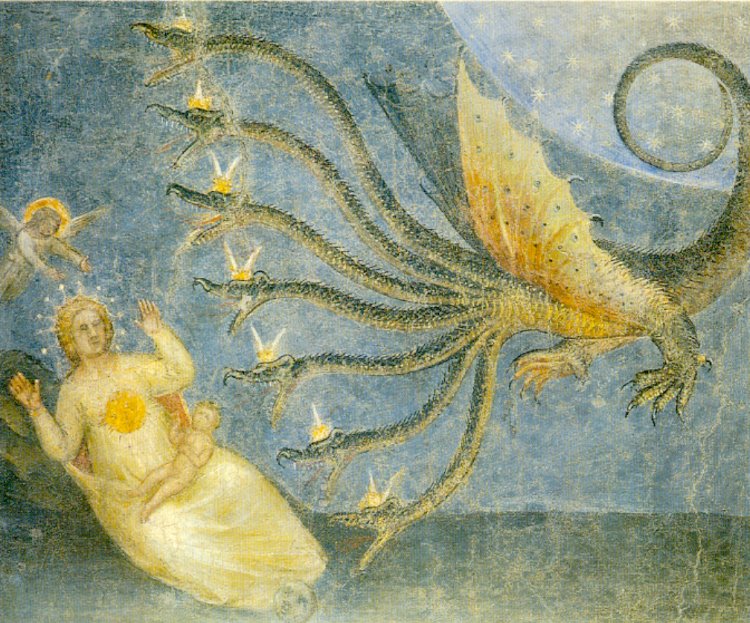
"A great portent appeared in heaven, a woman clothed with the sun" (Rev 12:1): the motherhood of Mary and of the Church.

103. The mutual relationship between the mystery of the Church and Mary appears clearly in the "great portent" described in the Book of Revelation: "A great portent appeared in heaven, a woman clothed with the sun, with the moon under her feet, and on her head a crown of twelve stars" (12:1). In this sign, the Church recognizes an image of her own mystery: present in history, she knows that she transcends history, inasmuch as she constitutes on earth the "seed and beginning" of the Kingdom of God. The Church sees this mystery fulfilled in complete and exemplary fashion in Mary. She is the woman of glory in whom God's plan could be carried out with supreme perfection.

The "woman clothed with the sun" -- the Book of Revelation tells us -- "was with child" (12:2). The Church is fully aware that she bears within herself the Savior of the world, Christ the Lord. She is aware that she is called to offer Christ to the world, giving men and women new birth into God's own life. But the Church cannot forget that her mission was made possible by the motherhood of Mary, who conceived and bore the One who is "God from God," "true God from true God." Mary is truly the Mother of God, the Theotokos, in whose motherhood the vocation to motherhood bestowed by God on every woman is raised to its highest level. Thus Mary becomes the model of the Church, called to be the "new Eve", the mother of believers, the mother of the "living."

The Church's spiritual motherhood is only achieved -- the Church knows this too -- through the pangs and "the labor" of childbirth (cf. Rev 12:2), that is to say, in constant tension with the forces of evil which still roam the world and affect human hearts, offering resistance to Christ: "In him was life, and the life was the light of men. The light shines in the darkness, and the darkness has not overcome it" (Jn 1:4-5).

Like the Church, Mary too had to live her motherhood amid suffering: "This child is set ... for a sign that is spoken against -- and a sword will pierce through your own soul also -- that thoughts out of many hearts may be revealed" (Lk 2:34-35). The words which Simeon addresses to Mary at the very beginning of the Savior’s earthly life sum up and prefigure the rejection of Jesus, and with him of Mary, a rejection which will reach its culmination on Calvary. "Standing by the cross of Jesus" (Jn 19:25), Mary shares in the gift which the Son makes of himself: she offers Jesus, gives him over, and begets him to the end for our sake. The "yes" spoken on the day of the Annunciation reaches full maturity on the day of the Cross, when the time comes for Mary to receive and beget as her children all those who become disciples, pouring out upon them the saving love of her Son: "When Jesus saw his mother, and the disciple whom he loved standing near, he said to his mother, ‘Woman, behold, your son!'" (Jn 19:26).

"And the dragon stood before the woman ... that he might devour her child when she brought it forth" (Rev 12:4): life menaced by the forces of evil.

104. In the Book of Revelation, the "great portent" of the "woman" (12:1) is accompanied by "another portent which appeared in heaven": "a great red dragon" (Rev 12:3), which represents Satan, the personal power of evil, as well as all the powers of evil at work in history and opposing the Church's mission.

Here too Mary sheds light on the Community of Believers. The hostility of the powers of evil is, in fact, an insidious opposition which, before affecting the disciples of Jesus, is directed against his mother. To save the life of her Son from those who fear him as a dangerous threat, Mary has to flee with Joseph and the Child into Egypt (cf. Mt 2:13-15).

Mary thus helps the Church to realize that life is always at the center of a great struggle between good and evil, between light and darkness. The dragon wishes to devour "the child brought forth" (cf. Rev 12:4), a figure of Christ, whom Mary brought forth "in the fullness of time" (Gal 4:4) and whom the Church must unceasingly offer to people in every age. But in a way that child is also a figure of every person, every child, especially every helpless baby whose life is threatened, because -- as the Council reminds us -- "by his Incarnation the Son of God has united himself in some fashion with every person." It is precisely in the "flesh" of every person that Christ continues to reveal himself and to enter into fellowship with us, so that rejection of human life, in whatever form that rejection takes, is really a rejection of Christ. This is the fascinating but also demanding truth which Christ reveals to us and which his Church continues untiringly to proclaim: "Whoever receives one such child in my name receives me" (Mt 18:5); "Truly, I say to you, as you did it to one of the least of these my brethren, you did it to me" (Mt 25:40).

"Death shall be no more" (Rev 21:4): the splendor of the Resurrection.

105. The angel's Annunciation to Mary is framed by these reassuring words: "Do not be afraid, Mary" and "with God nothing will be impossible" (Lk 1:30, 37). The whole of the Virgin Mother's life is in fact pervaded by the certainty that God is near to her and that he accompanies her with his providential care. The same is true of the Church, which finds "a place prepared by God" (Rev 12:6) in the desert, the place of trial but also of the manifestation of God's love for his people (cf. Hos 2:16). Mary is a living word of comfort for the Church in her struggle against death. Showing us the Son, the Church assures us that in him the forces of death have already been defeated: "Death with life contended: combat strangely ended! Life's own Champion, slain, yet lives to reign."

The Lamb who was slain is alive, bearing the marks of his Passion in the splendor of the Resurrection. He alone is master of all the events of history: he opens its "seals" (cf. Rev 5:1-10) and proclaims, in time and beyond, the power of life over death. In the "new Jerusalem," that new world towards which human history is travelling, "death shall be no more, neither shall there be mourning nor crying nor pain any more, for the former things have passed away" (Rev 21:4).

And as we, the pilgrim people, the people of life and for life, make our way in confidence towards "a new heaven and a new earth" (Rev 21:1), we look to her who is for us "a sign of sure hope and solace."
O Mary, bright dawn of the new world, Mother of the living, to you do we entrust the cause of life.

Look down, O Mother, upon the vast numbers of babies not allowed to be born, of the poor whose lives are made difficult, of men and women who are victims of brutal violence, of the elderly and the sick killed by indifference or out of misguided mercy.

Grant that all who believe in your Son may proclaim the Gospel of life with honesty and love to the people of our time.

Obtain for them the grace to accept that Gospel as a gift ever new, the joy of celebrating it with gratitude throughout their lives and the courage to bear witness to it resolutely, in order to build, together with all people of good will, the civilization of truth and love, to the praise and glory of God, the Creator and lover of life
. Amen.
-- John Paul II
This Mother's Day, let us all say with Blessed Karol Wojtyla, the Servant of God Pope John Paul the Great of happy memory, “Totus tuus ego sum et omnia mea tua sunt. Accipio te in mea omnia. Praebe mihi cor tuum, Maria." (I belong entirely to you, and all that I have is yours. I take you for my all. O Mary, give me your heart.)

Saturday, May 12, 2012

Suffering is also God’s Gift

In October 1996, Pope John Paul II was hospitalized again, this time to undergo surgery for the removal of an inflamed appendix. It was the fourth time he had major abdominal surgery at the hospital since 1981. A few days before going into the hospital, he appeared weak and tired in public, and his left hand trembled noticeably, leading observers to speculate that he had Parkinson's disease or some other neurological disorder.

Ours is a living faith -- it is not merely a faith of facts and moral precepts, but is a faith that is lived. Thus, while official and scholarly works of the Magisterium are all well and good, in spreading the Good News, often the best way is to provide a personal witness, to speak of the goodness and love of the Lord in our own personal lives.

Pope John Paul again spoke of his personal experience with suffering, uniting himself with the sick and suffering of the world, and all with Christ and His Blessed Mother. In doing so, he again took the paradoxical approach of rejoicing and being thankful for his sufferings, and giving words of good cheer.

Address of Bl. Pope John Paul II from Gemelli Hospital
Angelus, October 13, 1996
Dear Brothers and Sisters, I am deeply grateful to the Lord who today too has offered me the opportunity to meet you for the recitation of the Angelus. I am still in hospital, in this place of suffering and hope, a place of great care for the sick, a place of life. I would like first of all to address a greeting from here to those who are suffering physically and mentally, and to those who serve the sick: the doctors and nurses, the health-care personnel and support staff. May the Lord bless and comfort them all. . . .

My thoughts now turn to Mary most holy, whom the Christian people invoke as Queen of the Holy Rosary during the month of October. I entrust the Church and myself to her. I do so shortly before the 15th anniversary of my Petrine ministry and the 50th anniversary of my ordination to the priesthood.

During these days of illness I have been able to understand better the value of the service that the Lord has called me to render the Church as a priest, as a Bishop and as the Successor of Peter: it is also given through the gift of suffering by which it is possible to complete in one's own flesh "what is lacking in Christ's afflictions for the sake of his body, that is the Church" (Col 1:24).

May the Blessed Virgin accept the renewed offering of myself – Totus tuus ego sum – and watch caringly over my ministry and over the Church, comforting her on the way towards the Great Jubilee of the birth in time of the eternal Son of God.

I cordially greet all who are present in what I could call "Vatican number three", because "Vatican number one" is St Peter's Square, "number two" is Castel Gandolfo and number three has become the Gemelli Polyclinic. Thus after 1981, we see Vatican number three again, 15 years later, in 1996.

I greet you.

I thank this "Vatican number three", this Gemelli Polyclinic, for all the good that I have found here in the professors the doctors, the sisters and all the staff. And I thank you pilgrims who again have found your way to this "Vatican number three," to be together, to pray together, to sing together.

I greet all the Italians and all the others of various nationalities. I greet the Poles.

I greet Solidarity. They are now 15 years old, more or less, maybe a little older. Hold fast and do not give in! I greet all the Poles.

God bless you!

And once again, in person, I would like to give a blessing in the name of the Father, and of the Son and of the Holy Spirit.

Now, I have to go back to my room. Let us hope that next Sunday we will celebrate the Angelus at "Vatican number one", in St Peter's Square.

I renew my greetings to all the patients who are staying in this large hospital with me.

Goodbye!

Prayers of Intercession BY Those Who Suffer

We often speak of the need to pray for those who are sick or who suffer from some other hardship or those who are dying or have died. Indeed, such intercessory prayer by us is a spiritual work of mercy. But how often do we think of prayers of intercession by those who suffer, rather than only prayers for them? How often do we think of asking those who are suffering to pray for us? A few months after he was elected as Pope, in speaking about our need to be with those who are sick and suffering, John Paul II noted how these persons are near to God, and that prayers by them are invaluable.

Remarks of Blessed Pope John Paul II
Angelus, Feb. 11, 1979
I count a great deal on the prayer of the sick, on the intercession with God of those who are suffering. They are so near Christ! And I approach them, aware that Christ is present in them.

The suffering of one's neighbor, the suffering of another man, the same as oneself in everything, always causes a certain uneasiness, almost a sense of embarrassment, in those who are not suffering. A question arises instinctively: why he, and not I? One cannot avoid this question which is the elementary expression of human solidarity. I think it was this fundamental solidarity that created medicine and the whole health service in its historical evolution up to our own days.

We must stop, then, in front of suffering, in front of suffering man, to rediscover this essential link between one's human "self" and his. We must stop before suffering man, to testify to him and, as far as possible, together with him, all the dignity of suffering, I would say all the majesty of suffering. We must bow our heads before brothers or sisters who are weak and helpless, deprived just of what has been granted to us to enjoy every day.

These are just some aspects of that great ordeal which costs man so much, but which purifies him at the same time, as it purifies the one who seeks solidarity with the other, with the suffering human “self.”

Friday, May 11, 2012

The Pope Should be Attacked, the Pope Should Suffer

The life of Blessed Pope John Paul II is a life of beatitude. Now, remember, the beatitudes are paradoxical, it is in lowliness that one is exaulted. So, we should understand that this was a beatitude in hardship and suffering, which he endured all of his life. "The Lord was pleased to crush him in infirmity." (cf. Is 53:10) But it is in such suffering that we are most united to Christ in His Passion. And in being so united to Him, we are blessed.

Address of Bl. Pope John Paul II
Angelus, May 29, 1994
Through Mary I would like to express today my gratitude for this gift of suffering, associated once again with this Marian month of May. I want to appreciate this gift. I understand that it is a necessary gift. The Pope should be in the hospital Gemelli; he should be absent from this window for four weeks; in the same way he suffered thirteen years ago, he should suffer again this year.

I have meditated, I have reflected over all of this during my hospitalization. And I have found again at my side the great figure of Cardinal Wyszynski. At the start of my Pontificate he told me, “If the Lord has called you, you should take the Church of Christ to the Third Millennium.”

And I have understood that I should lead the Church of Christ to this Third Millennium with prayer, with various initiatives, but I have seen that this is not enough: I needed to lead it with suffering – with the attempt on my life 13 years ago and with this new suffering.

Why now? Why this year? Why in this year of the Family? Precisely now, because the family is being threatened, because it is being attacked. The Pope should be attacked, the Pope should suffer, so that all the families and the whole world can see that there is a gospel – I could say, a superior gospel – the gospel of suffering, with which we are to prepare the future, the Third Millennium of families, of all families and of each family.

I wanted to add these reflections in my first encounter with you at the end of this Marian month, because I owe this gift of suffering to the Blessed Virgin Mary, and I thank her. I understand it was important to have this debate before the powerful of the world. I need to meet again with the powerful of the world, and I have to speak up. With what arguments? I am left with this argument of suffering. And I would like to tell them: understand, understand why the Pope has returned to the hospital, why has he suffered again; understand it, reflect on this one more time.
Note the date of the Pope's remarks here - May 1994. We remember His Holiness being "crushed in infirmity" at the end of his worldly sojourn, but, given his active schedule, we tend to forget that, especially after the shooting, he had suffered multiple health issues for a long, long time.

Thursday, May 10, 2012

Deed for the Pious Transfer of His Holiness John Paul II

In the light of Christ risen from the dead, on 2 April A.D. 2005, at 9: 37 p.m., while Saturday was drawing to a close and we were already beginning the Lord's Day, the Octave of Easter and Divine Mercy Sunday, the Church's beloved Pastor, John Paul II, departed this world for the Father. The whole Church, especially the young, accompanied his passing with prayers.

John Paul II was the 264th Pope. His memory lives on in the Church and in all human hearts.

Karol Wojtyła, elected Pope on 16 October 1978, was born in Wadowice, 50 k. from Krakow, on 18 May 1920. He was baptized two days later in the parish church by the parish priest, Fr Francesco Zak.

He received his First Holy Communion at the age of 9 years old and the sacrament of Confirmation when he was 18. His studies were interrupted by the invasion of the Nazis who shut down the university; he went to work in a quarry and later in the Solvay chemical factory.

From 1942 forward, feeling that he was called to be a priest, he took the formation courses provided by the clandestine seminary in Krakow. On 1 November 1946, he was ordained a priest by Cardinal Adam Sapieha. He was then sent to Rome where he earned a licence and a doctorate in theology with a thesis on Doctrina de fide apud Sanctum Ioannem a Cruce.

He returned to Poland where he worked in pastoral ministry and taught the sacred disciplines. On 4 July 1958, Pope Pius XII appointed him Auxiliary Bishop of Krakow, of which Paul VI appointed him Bishop in 1964. It was in this capacity that he participated in the Second Vatican Council. Paul VI created him a Cardinal on 26 June 1967.

The Cardinals elected him Pope at the Conclave on 16 October 1978, and he took the name of John Paul II. On 22 October, the Lord's Day, he solemnly inaugurated his Petrine ministry.

John Paul II's Pontificate was one of the longest in the history of the Church. In this period we have seen many changes, in many aspects. The list includes the fall of several regimes to which he himself contributed; and in order to proclaim the Gospel he travelled to various nations.

John Paul II exercised the Petrine ministry with a tireless missionary spirit, devoting to it all his energy. He was sustained throughout by the sollicitudo omnium ecclesiarum and by his love for all. He had more Meetings than any of his Predecessors with the People of God, the leaders of Nations, in Celebrations and at General and Private Audiences, as well as during his Pastoral Visits.

His love for young people made him inclined to establish the World Youth Days, to which he summoned millions of young people in various parts of the world.

He successfully encouraged dialogue with the Jews and with the representatives of other religions, whom he several times invited to prayer meetings for peace, especially the meetings in Assisi.

He considerably increased the College of Cardinals, creating 231 Cardinals (plus one Cardinal in pectore). He organized 15 Assemblies of the Synod of Bishops - seven General Ordinary Assemblies and eight Special Assemblies. He established many new Dioceses and Circumscriptions, especially in Eastern Europe.

He reformed the Eastern and Western Codes of Canon Law, created new Institutions and reorganized the Roman Curia.

As "sacerdos magnus", John Paul II exercised liturgical ministry in the Diocese of Rome and throughout the world in total fidelity to the Second Vatican Council. He set an outstanding example in promoting liturgical life and spirituality, as well as contemplative prayer and especially adoration of the Eucharist and the prayer of the Holy Rosary (cf. Apostolic Letter Rosarium Virginis Mariae).

Under his guidance the Church prepared herself for the third millennium and celebrated the Great Jubilee of the year 2000 in accordance with the instructions given in the Apostolic Letter Tertio Millennio Adveniente. The Church then faced the new epoch, receiving his instructions in the Apostolic Letter Novo Millennio Ineunte, in which he pointed out to the faithful their future path.

With the Year of the Redemption, the Marian Year and the Year of the Eucharist, he promoted the spiritual renewal of the Church. He gave an extraordinary impetus to Canonizations and Beatifications, focusing on countless examples of holiness today that would be an incentive to the people of our time. He proclaimed Thérèse of the Child Jesus a Doctor of the Church.

The doctrinal magisterium of John Paul II is very rich. As custodian of the deposit of faith, he strove with wisdom and courage to promote Catholic theological, moral and spiritual teaching and, throughout his Pontificate, to counter the trends that opposed the genuine tradition of the Church.

His most important Documents include 14 Encyclicals, 15 Apostolic Exhortations, 11 Apostolic Constitutions, 45 Apostolic Letters, as well as the Catecheses he gave at the General Audiences and his Speeches in every part of the world. With his teaching John Paul II strengthened and enlightened the People of God on theological (especially in his first three great Encyclicals - Redemptor Hominis, Dives in Misericordia, Dominum et Vivificantem), social and anthropological (Laborem Exercens, Sollicitudo Rei Socialis, Centesimus Annus), moral (Veritatis Splendor, Evangelium Vitae), ecumenical (Ut Unum Sint), missiological (Redemptoris Missio) and Mariological (Redemptoris Mater) doctrine.

He promulgated the Catechism of the Catholic Church in the light of Tradition, authoritatively interpreted by the Second Vatican Council. He also published several volumes as a private Doctor.

His magisterium culminated in the Encyclical Ecclesia de Eucharistia and in the Apostolic Letter Mane Nobiscum Domine, during the Year of the Eucharist.

John Paul II has bequeathed to all a wonderful witness of piety, of a holy life and of universal fatherhood.
……………

Signed by the witnesses of the celebrations and of the burial

……………
CORPUS IOANNIS PAULI II P.M.
VIXIT ANNOS LXXXIV, MENSES X DIES XV
ECCLESIAE UNIVERSAE PRAEFUIT
ANNOS XXVI MENSES V DIES XVII

Semper in Christo vivas, Pater Sancte!

Source

Encounter with a Pope

This is a picture I took of il Papa when I saw him in Rome at the General Audience for September 29, 2004.

Tuesday, May 8, 2012

The Beatitude of Karol Wojtyla


Homily of His Holiness Pope Benedict XVI
Mass for the Beatification of the Servant of God John Paul II

Divine Mercy Sunday, May 1, 2011
Dear Brothers and Sisters,

Six years ago we gathered in this Square to celebrate the funeral of Pope John Paul II. Our grief at his loss was deep, but even greater was our sense of an immense grace which embraced Rome and the whole world: a grace which was in some way the fruit of my beloved predecessor’s entire life, and especially of his witness in suffering. Even then we perceived the fragrance of his sanctity, and in any number of ways God’s People showed their veneration for him. For this reason, with all due respect for the Church’s canonical norms, I wanted his cause of beatification to move forward with reasonable haste. And now the longed-for day has come; it came quickly because this is what was pleasing to the Lord: John Paul II is blessed!

I would like to offer a cordial greeting to all of you who on this happy occasion have come in such great numbers to Rome from all over the world – cardinals, patriarchs of the Eastern Catholic Churches, brother bishops and priests, official delegations, ambassadors and civil authorities, consecrated men and women and lay faithful, and I extend that greeting to all those who join us by radio and television.

Today is the Second Sunday of Easter, which Blessed John Paul II entitled Divine Mercy Sunday. The date was chosen for today’s celebration because, in God’s providence, my predecessor died on the vigil of this feast. Today is also the first day of May, Mary’s month, and the liturgical memorial of Saint Joseph the Worker. All these elements serve to enrich our prayer, they help us in our pilgrimage through time and space; but in heaven a very different celebration is taking place among the angels and saints! Even so, God is but one, and one too is Christ the Lord, who like a bridge joins earth to heaven. At this moment we feel closer than ever, sharing as it were in the liturgy of heaven.

Blessed are those who have not seen and yet have come to believe” (Jn 20:29). In today’s Gospel Jesus proclaims this beatitude: the beatitude of faith. For us, it is particularly striking because we are gathered to celebrate a beatification, but even more so because today the one proclaimed blessed is a Pope, a Successor of Peter, one who was called to confirm his brethren in the faith.

John Paul II is blessed because of his faith, a strong, generous and apostolic faith. We think at once of another beatitude: “Blessed are you, Simon, son of Jonah! For flesh and blood has not revealed this to you, but my Father in heaven” (Mt 16:17). What did our heavenly Father reveal to Simon? That Jesus is the Christ, the Son of the living God. Because of this faith, Simon becomes Peter, the rock on which Jesus can build his Church. The eternal beatitude of John Paul II, which today the Church rejoices to proclaim, is wholly contained in these sayings of Jesus: “Blessed are you, Simon” and “Blessed are those who have not seen and yet have come to believe!” It is the beatitude of faith, which John Paul II also received as a gift from God the Father for the building up of Christ’s Church.

Our thoughts turn to yet another beatitude, one which appears in the Gospel before all others. It is the beatitude of the Virgin Mary, the Mother of the Redeemer. Mary, who had just conceived Jesus, was told by Saint Elizabeth: “Blessed is she who believed that there would be a fulfilment of what was spoken to her by the Lord” (Lk 1:45). The beatitude of faith has its model in Mary, and all of us rejoice that the beatification of John Paul II takes place on this first day of the month of Mary, beneath the maternal gaze of the one who by her faith sustained the faith of the Apostles and constantly sustains the faith of their successors, especially those called to occupy the Chair of Peter. Mary does not appear in the accounts of Christ’s resurrection, yet hers is, as it were, a continual, hidden presence: she is the Mother to whom Jesus entrusted each of his disciples and the entire community. In particular we can see how Saint John and Saint Luke record the powerful, maternal presence of Mary in the passages preceding those read in today’s Gospel and first reading. In the account of Jesus’ death, Mary appears at the foot of the cross (Jn 19:25), and at the beginning of the Acts of the Apostles she is seen in the midst of the disciples gathered in prayer in the Upper Room (Acts 1:14).

Today’s second reading also speaks to us of faith. Saint Peter himself, filled with spiritual enthusiasm, points out to the newly-baptized the reason for their hope and their joy. I like to think how in this passage, at the beginning of his First Letter, Peter does not use language of exhortation; instead, he states a fact. He writes: “you rejoice”, and he adds: “you love him; and even though you do not see him now, you believe in him and rejoice with an indescribable and glorious joy, for you are receiving the outcome of your faith, the salvation of your souls” (1 Pet 1:6, 8-9). All these verbs are in the indicative, because a new reality has come about in Christ’s resurrection, a reality to which faith opens the door. “This is the Lord’s doing”, says the Psalm (118:23), and “it is marvelous in our eyes”, the eyes of faith.

Dear brothers and sisters, today our eyes behold, in the full spiritual light of the risen Christ, the beloved and revered figure of John Paul II. Today his name is added to the host of those whom he proclaimed saints and blesseds during the almost twenty-seven years of his pontificate, thereby forcefully emphasizing the universal vocation to the heights of the Christian life, to holiness, taught by the conciliar Constitution on the Church, Lumen Gentium. All of us, as members of the people of God – bishops, priests, deacons, laity, men and women religious – are making our pilgrim way to the heavenly homeland where the Virgin Mary has preceded us, associated as she was in a unique and perfect way to the mystery of Christ and the Church.

Karol Wojtyła took part in the Second Vatican Council, first as an auxiliary Bishop and then as Archbishop of Kraków. He was fully aware that the Council’s decision to devote the last chapter of its Constitution on the Church to Mary meant that the Mother of the Redeemer is held up as an image and model of holiness for every Christian and for the entire Church.

This was the theological vision which Blessed John Paul II discovered as a young man and subsequently maintained and deepened throughout his life. A vision which is expressed in the scriptural image of the crucified Christ with Mary, his Mother, at his side. This icon from the Gospel of John (19:25-27) was taken up in the episcopal and later the papal coat-of-arms of Karol Wojtyła: a golden cross with the letter "M" on the lower right and the motto “Totus tuus”, drawn from the well-known words of Saint Louis Marie Grignion de Montfort in which Karol Wojtyła found a guiding light for his life: “Totus tuus ego sum et omnia mea tua sunt. Accipio te in mea omnia. Praebe mihi cor tuum, Maria – I belong entirely to you, and all that I have is yours. I take you for my all. O Mary, give me your heart” (Treatise on True Devotion to the Blessed Virgin, 266).

In his Testament, the new Blessed wrote: “When, on 16 October 1978, the Conclave of Cardinals chose John Paul II, the Primate of Poland, Cardinal Stefan Wyszyński, said to me: ‘The task of the new Pope will be to lead the Church into the Third Millennium’”. And the Pope added:
“I would like once again to express my gratitude to the Holy Spirit for the great gift of the Second Vatican Council, to which, together with the whole Church – and especially with the whole episcopate – I feel indebted. I am convinced that it will long be granted to the new generations to draw from the treasures that this Council of the twentieth century has lavished upon us. As a Bishop who took part in the Council from the first to the last day, I desire to entrust this great patrimony to all who are and will be called in the future to put it into practice. For my part, I thank the Eternal Shepherd, who has enabled me to serve this very great cause in the course of all the years of my Pontificate”.
And what is this “cause”? It is the same one that John Paul II presented during his first solemn Mass in Saint Peter’s Square in the unforgettable words: “Do not be afraid! Open, open wide the doors to Christ!” What the newly-elected Pope asked of everyone, he was himself the first to do: society, culture, political and economic systems he opened up to Christ, turning back with the strength of a titan – a strength which came to him from God – a tide which appeared irreversible. By his witness of faith, love and apostolic courage, accompanied by great human charisma, this exemplary son of Poland helped believers throughout the world not to be afraid to be called Christian, to belong to the Church, to speak of the Gospel. In a word: he helped us not to fear the truth, because truth is the guarantee of liberty. To put it even more succinctly: he gave us the strength to believe in Christ, because Christ is Redemptor hominis, the Redeemer of man. This was the theme of his first encyclical, and the thread which runs though all the others.

When Karol Wojtyła ascended to the throne of Peter, he brought with him a deep understanding of the difference between Marxism and Christianity, based on their respective visions of man. This was his message: man is the way of the Church, and Christ is the way of man. With this message, which is the great legacy of the Second Vatican Council and of its “helmsman”, the Servant of God Pope Paul VI, John Paul II led the People of God across the threshold of the Third Millennium, which thanks to Christ he was able to call “the threshold of hope”. Throughout the long journey of preparation for the great Jubilee he directed Christianity once again to the future, the future of God, which transcends history while nonetheless directly affecting it. He rightly reclaimed for Christianity that impulse of hope which had in some sense faltered before Marxism and the ideology of progress. He restored to Christianity its true face as a religion of hope, to be lived in history in an “Advent” spirit, in a personal and communitarian existence directed to Christ, the fullness of humanity and the fulfillment of all our longings for justice and peace.

Finally, on a more personal note, I would like to thank God for the gift of having worked for many years with Blessed Pope John Paul II. I had known him earlier and had esteemed him, but for twenty-three years, beginning in 1982 after he called me to Rome to be Prefect of the Congregation for the Doctrine of the Faith, I was at his side and came to revere him all the more. My own service was sustained by his spiritual depth and by the richness of his insights.

His example of prayer continually impressed and edified me: he remained deeply united to God even amid the many demands of his ministry. Then too, there was his witness in suffering: the Lord gradually stripped him of everything, yet he remained ever a “rock”, as Christ desired. His profound humility, grounded in close union with Christ, enabled him to continue to lead the Church and to give to the world a message which became all the more eloquent as his physical strength declined. In this way he lived out in an extraordinary way the vocation of every priest and bishop to become completely one with Jesus, whom he daily receives and offers in the Church.

Blessed are you, beloved Pope John Paul II, because you believed! Continue, we implore you, to sustain from heaven the faith of God’s people. You often blessed us in this Square from the Apostolic Palace: Bless us, Holy Father! Amen.

Monday, May 7, 2012

Prayer for the Intercession of Blessed Pope John Paul II

O Blessed Trinity, We thank you for having graced the Church with Pope John Paul II and for allowing the tenderness of your Fatherly care, the glory of the cross of Christ, and the splendor of the Holy Spirit, to shine through him.

Trusting fully in Your infinite mercy and in the maternal intercession of Mary, he has given us a living image of Jesus the Good Shepherd, and has shown us that holiness is the necessary measure of ordinary Christian life and is the way of achieving eternal communion with you.

Grant us, by his intercession, and according to Your will, the graces we implore, hoping that he will soon be numbered among your saints. Amen.

Sunday, May 6, 2012

Review of Pope John Paul II (2005)

Movie Review
by Steven D. Greydanus
Decent Films Guide
Pope John Paul II is the first — so far the only — dramatic presentation to do anything like justice to the life and reign of the 20th century’s most popular pope. . . .

Reverent, respectful, well acted and well-paced, Pope John Paul II does about as good a job at covering both halves of its subject’s life as could be hoped for in a TV movie. The miniseries neatly splits its two nights between the pre-election Karol Wojtyla and the reign of Pope John Paul II, with Cary Elwes (The Princess Bride) playing Wojtyla from his youth to the 1978 conclave and Jon Voight (Holes) playing John Paul II from the conclave to his 2005 death.

Both actors do a remarkably good job at evoking the speech, style and physical presence of this most media-exposed of popes. Elwes particularly excels at projecting Wojtyla’s formidable intellect and passion, and Voight is especially good at realizing the Holy Father’s pastoral spirit and iron resolve. Both actors effectively tackle the physicality of the role, Elwes energetic and athletic as the younger Wojtyla and Voight giving an impressively controlled performance from the vigor of the early years of the papacy through the slow decline to that painful final public appearance when all the pope’s immense willpower could not coax speech from his throat. . . .

The screenplay, credited to director John Kent Harrison and three other writers, makes good choices in delineates the issues and experiences that defined Wojtyla’s early adulthood: his university life interrupted by the Nazi decapitation of Polish institutions; the theory of cultural resistance behind his participation in the Rhapsodic Theater; his rock-blasting work in the quarries, which kept him from being deported but also instilled in him a lifelong appreciation for the dignity of manual labor. . . .

Pope John Paul II is a fitting tribute to a great papacy, well researched and well mounted, benefiting substantially from the active cooperation of Vatican insiders, authentic locations in Poland and Rome, and a solid supporting cast.
(read the entire review here)

Saturday, May 5, 2012

Habemus Papam!
His Holiness Pope John Paul II

On October 16, 1978, at 6:18 p.m. (Rome time), white smoke appeared from the chimney of the Sistine Chapel. Shortly thereafter, Pericle Cardinal Felici came out onto the balcony of St. Peter's Basilica and announced,
"Annuntio vobis gaudium magnum: Habemus papam! Emminentissimum ac reverendissimum dominum, dominum Carolum, sanctæ romanæ Ecclesiæ cardinalem Wojtyła, qui sibi nomen imposuit Ioannis Pauli."


Karol Cardinal Wojtyla, the 58-year-old Archbishop of Kraków, Poland, had been elected as the successor of St. Peter and Pope John Paul the First, who had died suddenly a few weeks before. As Pope, he took the name of John Paul the Second, but toward the end of his papacy, and since his death, he has been known by many to be Pope John Paul the Great.


When it was clear after the first day of voting that none of the Italian papabili would be able to achieve the necessary two-thirds plus one needed for election, the cardinal-electors began to think the unthinkable by looking beyond Italy for a new shepherd of the Church. Having impressed those in the know for years, the name of Cardinal Wojtyla was advanced overnight, and he began to receive votes during the fifth round in the morning. During lunch, having gained votes in the sixth round, a shocked Cardinal Wojtyla was visibly upset by the voting coalescing around him. Poland's Stefan Cardinal Wyszynski took him aside and reminded him that he had a duty accept if God called him. At the end of the second day of voting, in the eighth round, with the certain guidance of the Holy Spirit, Cardinal Wojtyla was elected.
Praised be Jesus Christ! Dear brothers and sisters, we are still all very saddened by the death of the very dear Pope John Paul I. And now the most eminent cardinals have called a new bishop of Rome. They called him from a far-away country...far, but always near in the communion of faith and the Christian tradition. I was afraid in receiving this nomination, but I did it in the spirit of obedience to Our Lord and with total trust in his Mother, the Most Holy Madonna. I don't know if I can express myself well in your – in our – Italian language. But if I make a mistake, you will correct me. And so I introduce myself to you all, to confess our common faith, our hope, our trust in the Mother of Christ and of the Church, and also to begin again on this path of history and of the Church with the help of God and with that of men.
--First Address of Pope John Paul II

John Paul II came from a far country - a country that had been ravaged by the Nazis and Communists, a country of martyrs, Christian martyrs, Jewish martyrs, who overcame their persecutors because of their faith in the Lord and the graces bestowed upon them by the Holy Spirit. Athletic, and fluent in Polish, Latin, Italian, English, French and German, having known much suffering in his life, the new Pope was not afraid to confront evil and proclaim the truth.
Brothers and sisters, do not be afraid to welcome Christ and accept his power. Help the Pope and all those who wish to serve Christ and with Christ's power to serve the human person and the whole of mankind. Be not afraid. Open wide the doors for Christ. . . . Be not afraid. Christ knows "what is in man." He alone knows it. So often today man does not know what is within him, in the depths of his mind and heart. So often he is uncertain about the meaning of his life on this earth. He is assailed by doubt, a doubt which turns into despair. We ask you therefore, we beg you with humility and trust, let Christ speak to man. He alone has words of life, yes, of eternal life.
--Pope John Paul II, Mass of Installation

.