The sun still rises in the east. Blue is still blue. Two plus two are still four. And the conjugal union of a man and woman is still the only relationship that is capable as constituting marriage.
Truth does not change.
The question is -- Do you stand for truth? Or do you bend to legal fictions? Will you marvel at the emperor's pretend clothes?
Showing posts with label truth. Show all posts
Showing posts with label truth. Show all posts
Saturday, June 27, 2015

Tuesday, December 25, 2012
Truth has sprung out of the earth
Urbi et Orbi Message of Pope Benedict XVI
Christmas Day 2012
Christmas Day 2012
“Veritas de terra orta est!” – “Truth has sprung out of the earth” (Ps 85:12).
Dear brothers and sisters in Rome and throughout the world, a happy Christmas to you and your families!
In this Year of Faith, I express my Christmas greetings and good wishes in these words taken from one of the Psalms: “Truth has sprung out of the earth.” Actually, in the text of the Psalm, these words are in the future:“Kindness and truth shall meet; / justice and peace shall kiss. / Truth shall spring out of the earth, /and justice shall look down from heaven. / The Lord himself will give his benefits; / our land shall yield its increase. / Justice shall walk before him, / and salvation, along the way of his steps” (Ps 85:11-14).Today these prophetic words have been fulfilled! In Jesus, born in Bethlehem of the Virgin Mary, kindness and truth do indeed meet; justice and peace have kissed; truth has sprung out of the earth and justice has looked down from heaven.
Saint Augustine explains with admirable brevity: “What is truth? The Son of God. What is the earth? The flesh. Ask whence Christ has been born, and you will see that truth has sprung out of the earth … truth has been born of the Virgin Mary” (En. in Ps. 84:13). And in a Christmas sermon he says that“in this yearly feast we celebrate that day when the prophecy was fulfilled: ‘truth shall spring out of the earth, and justice shall look down from heaven’. The Truth, which is in the bosom of the Father has sprung out of the earth, to be in the womb of a mother too. The Truth which rules the whole world has sprung out of the earth, to be held in the arms of a woman ... The Truth which heaven cannot contain has sprung out of the earth, to be laid in a manger. For whose benefit did so lofty a God become so lowly? Certainly not for his own, but for our great benefit, if we believe” (Sermones, 185, 1).“If we believe.” Here we see the power of faith! God has done everything; he has done the impossible: he was made flesh. His all-powerful love has accomplished something which surpasses all human understanding: the Infinite has become a child, has entered the human family.
And yet, this same God cannot enter my heart unless I open the door to him. Porta fidei! The door of faith! We could be frightened by this, our inverse omnipotence. This human ability to be closed to God can make us fearful. But see the reality which chases away this gloomy thought, the hope that conquers fear: truth has sprung up! God is born!
“The earth has yielded its fruits” (Ps 67:7). Yes, there is a good earth, a healthy earth, an earth freed of all selfishness and all lack of openness. In this world there is a good soil which God has prepared, that he might come to dwell among us. A dwelling place for his presence in the world. This good earth exists, and today too, in 2012, from this earth truth has sprung up! Consequently, there is hope in the world, a hope in which we can trust, even at the most difficult times and in the most difficult situations. Truth has sprung up, bringing kindness, justice and peace.
Saturday, June 11, 2011
Faith, Hope, and Love, and the Conscience of Sophie Scholl
If we have a love of truth, rather than a self-centered will, then we open ourselves to the transcendent, we open ourselves to God. And if we place our faith in God, rather than placing our faith in un-Godly men and things, then we will have hope, a trustworthy expectation that harm will not prevail over us, rather than despairing that all is lost.
The hunger for truth in love is something present within all of us because it is imprinted upon our very nature, by God, to love and be loved in truth, to do what is right and good and avoid evil, even if some people act to the contrary. These theological virtues of faith, hope, and love also open us up to grace, the power of God Himself. Grace-infused faith, hope, and love provide the fortitude to listen to that voice of conscience within us and to actually do the right thing.
Conscience is not the same as one’s opinions or feelings, rather, it is a judgment of reason in the application of objective moral truth to a particular case. The word "conscience" comes from the Latin "con-scientia," meaning "with knowledge." Knowledge of what? Knowledge of something other than ourselves, something that is beyond the self -- knowledge of truth, knowledge of the voice of He who is Truth itself, the God who exhorts us to love in truth.
One cannot justify his conduct merely by saying that, because he does not feel bad or think it wrong, such conduct does not violate his “conscience,” as if he could choose or create his own conscience. That is not the conscience, that is the will.
The Nazi leader Hermann Goring proclaimed, "my conscience is Adolf Hitler." Others proclaim, "my conscience is myself." But the foundation of conscience is not man, but God.
Rightly understood, conscience is not the voice of self, but the voice of God within our hearts, our very souls, it is the light which is given us so that we might make our way in the dark. In this, God speaks even to the hearts of atheists and, if they are otherwise of good faith, they can hear Him even if they do not realize that it is His voice speaking to them.
We ourselves are not the light, God is the Light. The task of conscience is not to create moral truth, but to perceive it. The judgment of conscience does not establish the law or decide for itself what is right or wrong; rather it bears witness to the authority of the natural law, it is the voice of Truth within the person calling him to act in conformance with truth, to do good and avoid evil.
A good conscience does not restrict human freedom, but instead calls a person to genuine freedom in truth, for only in truth will one be set free. A poorly formed "conscience" is not one that is "with knowledge," but is instead one that is "with ignorance." So the obligation to follow one’s conscience is an obligation to follow a good conscience, one that is "with knowledge" of transcendent truth, and not a bad or erroneous or malformed counterfeit "conscience."
In journeying through life, now and then we come to a crossroads and must choose between the good or the evil. When confronted with evil, we have an obligation in conscience, written as law upon our hearts, to do the good and resist and fight the evil. One cannot stand idly by in the face of evil. To simply go along and avoid having to confront evil can quickly become cooperation with evil, especially since evil often will not leave you alone, but will demand your involvement and approval. Many otherwise "good" Germans merely went along with the Nazis, afraid of the consequences if they were to resist that evil, but not Sophie Scholl.
Her love of what is right and good and just, building on rock by placing her faith in God, rather than in a twisted anti-God despot whose hatred for the inherent dignity of man offered only the hopelessness of Hell to the people of the world, gave Sophie the grace and fortitude to defiantly shine the light of truth on the evils of the Nazi regime. Inspired by the words of Blessed John Henry Newman, Blessed Clemens August von Galen, Catholic Bishop of Münster, and other Catholic scholars and thinkers, Sophie sought to awaken the conscience of the German people so that they might liberate themselves from the great evil of Adolf Hitler and National Socialism.
In her activity with the White Rose, and at her interrogation and trial, from her faith, hope, and love, we see in Sophie Scholl a whole panoply of virtue and grace and beatitude at play, from justice, fortitude, prudence, and temperance, to wisdom, counsel, knowledge, understanding, piety, and fear of the Lord, to goodness, kindness, faithfulness, joy, and peace, to being poor in spirit and mournful, hungry and thirsty for righteousness, and persecuted for that righteousness’ sake.
This is a good lesson to learn. Although we might not live in a totalitarian regime such as Nazi Germany, there are other evils in the world, other attacks on the inherent dignity of the human person.
Can we, in all good conscience, do nothing or merely go along? Or should we, like Sophie, be a light to a dark world?
.
The hunger for truth in love is something present within all of us because it is imprinted upon our very nature, by God, to love and be loved in truth, to do what is right and good and avoid evil, even if some people act to the contrary. These theological virtues of faith, hope, and love also open us up to grace, the power of God Himself. Grace-infused faith, hope, and love provide the fortitude to listen to that voice of conscience within us and to actually do the right thing.
Conscience is not the same as one’s opinions or feelings, rather, it is a judgment of reason in the application of objective moral truth to a particular case. The word "conscience" comes from the Latin "con-scientia," meaning "with knowledge." Knowledge of what? Knowledge of something other than ourselves, something that is beyond the self -- knowledge of truth, knowledge of the voice of He who is Truth itself, the God who exhorts us to love in truth.
One cannot justify his conduct merely by saying that, because he does not feel bad or think it wrong, such conduct does not violate his “conscience,” as if he could choose or create his own conscience. That is not the conscience, that is the will.
The Nazi leader Hermann Goring proclaimed, "my conscience is Adolf Hitler." Others proclaim, "my conscience is myself." But the foundation of conscience is not man, but God.
Rightly understood, conscience is not the voice of self, but the voice of God within our hearts, our very souls, it is the light which is given us so that we might make our way in the dark. In this, God speaks even to the hearts of atheists and, if they are otherwise of good faith, they can hear Him even if they do not realize that it is His voice speaking to them.
We ourselves are not the light, God is the Light. The task of conscience is not to create moral truth, but to perceive it. The judgment of conscience does not establish the law or decide for itself what is right or wrong; rather it bears witness to the authority of the natural law, it is the voice of Truth within the person calling him to act in conformance with truth, to do good and avoid evil.
A good conscience does not restrict human freedom, but instead calls a person to genuine freedom in truth, for only in truth will one be set free. A poorly formed "conscience" is not one that is "with knowledge," but is instead one that is "with ignorance." So the obligation to follow one’s conscience is an obligation to follow a good conscience, one that is "with knowledge" of transcendent truth, and not a bad or erroneous or malformed counterfeit "conscience."
In journeying through life, now and then we come to a crossroads and must choose between the good or the evil. When confronted with evil, we have an obligation in conscience, written as law upon our hearts, to do the good and resist and fight the evil. One cannot stand idly by in the face of evil. To simply go along and avoid having to confront evil can quickly become cooperation with evil, especially since evil often will not leave you alone, but will demand your involvement and approval. Many otherwise "good" Germans merely went along with the Nazis, afraid of the consequences if they were to resist that evil, but not Sophie Scholl.
Her love of what is right and good and just, building on rock by placing her faith in God, rather than in a twisted anti-God despot whose hatred for the inherent dignity of man offered only the hopelessness of Hell to the people of the world, gave Sophie the grace and fortitude to defiantly shine the light of truth on the evils of the Nazi regime. Inspired by the words of Blessed John Henry Newman, Blessed Clemens August von Galen, Catholic Bishop of Münster, and other Catholic scholars and thinkers, Sophie sought to awaken the conscience of the German people so that they might liberate themselves from the great evil of Adolf Hitler and National Socialism.
In her activity with the White Rose, and at her interrogation and trial, from her faith, hope, and love, we see in Sophie Scholl a whole panoply of virtue and grace and beatitude at play, from justice, fortitude, prudence, and temperance, to wisdom, counsel, knowledge, understanding, piety, and fear of the Lord, to goodness, kindness, faithfulness, joy, and peace, to being poor in spirit and mournful, hungry and thirsty for righteousness, and persecuted for that righteousness’ sake.
This is a good lesson to learn. Although we might not live in a totalitarian regime such as Nazi Germany, there are other evils in the world, other attacks on the inherent dignity of the human person.
Can we, in all good conscience, do nothing or merely go along? Or should we, like Sophie, be a light to a dark world?
.
Wednesday, June 8, 2011
Hans and Sophie Scholl and Newman on Conscience
Although they were raised Protestant, both Hans and Sophie Scholl were highly influenced by Blessed John Henry Newman and his "theology of conscience." An associate of theirs, Theodor Haecker, was a scholar of Newman and had translated his works into German. When Sophie's boyfriend Fritz Hartnagel was deployed to the eastern front, she gave him two volumes on the sermons of Cardinal Newman, and his thought influenced Fritz as well.
Acting on conscience themselves, because they could no longer in good conscience fail to act against the Nazi regime, much of the purpose of the leaflets of the White Rose was an appeal to the conscience of the German people, to rouse them to stop ignoring that voice within them and instead, in obedience to that voice of truth and what is right and good, to resist the horrific evil in their midst.
On the Nature of the Conscience
Letter to the Duke of Norfolk
Blessed John Henry Newman
December 27, 1874
The Testimony of a Good Conscience
Sermon of Blessed John Henry Newman
Next: The Leaflets of the White Rose - "We will not be silent. We are your bad conscience. The White Rose will not leave you in peace!"
.
Acting on conscience themselves, because they could no longer in good conscience fail to act against the Nazi regime, much of the purpose of the leaflets of the White Rose was an appeal to the conscience of the German people, to rouse them to stop ignoring that voice within them and instead, in obedience to that voice of truth and what is right and good, to resist the horrific evil in their midst.
On the Nature of the Conscience
Letter to the Duke of Norfolk
Blessed John Henry Newman
December 27, 1874
I must begin with the Creator and His creature when I would draw out the prerogatives and the supreme authority of Conscience.
I say, then, that the Supreme Being is of a certain character, which, expressed in human language, we call ethical. He has the attributes of justice, truth, wisdom, sanctity, benevolence and mercy, as eternal characteristics in His nature, the very Law of His being, identical with Himself; and next, when He became Creator, He implanted this Law, which is Himself, in the intelligence of all His rational creatures. The Divine Law, then, is the rule of ethical truth, the standard of right and wrong, a sovereign, irreversible, absolute authority in the presence of men and Angels."The eternal law," says St. Augustine, "is the Divine Reason or Will of God, commanding the observance, forbidding the disturbance, of the natural order of things." "The natural law," says St. Thomas, "is an impression of the Divine Light in us, a participation of the eternal law in the rational creature."
This law, as apprehended in the minds of individual men, is called "conscience," and though it may suffer refraction in passing into the intellectual medium of each, it is not therefore so affected as to lose its character of being the Divine Law, but still has, as such, the prerogative of commanding obedience. . . . this law is the rule of our conduct by means of our conscience. Hence it is never lawful to go against our conscience; as the fourth Lateran Council says. . . .
This view of conscience, I know, is very different from that ordinarily taken of it, both by the science and literature, and by the public opinion, of this day. It is founded on the doctrine that conscience is the voice of God, whereas it is fashionable on all hands now to consider it in one way or another a creation of man.
Of course, there are great and broad exceptions to this statement. It is not true of many or most religious bodies of men; especially not of their teachers and ministers. When Anglicans, Wesleyans, the various Presbyterian sects in Scotland, and other denominations among us, speak of conscience, they mean what we [Catholics] mean, the voice of God in the nature and heart of man, as distinct from the voice of Revelation. They speak of a principle planted within us, before we have had any training, although training and experience are necessary for its strength, growth, and due formation. They consider it a constituent element of the mind, as our perception of other ideas may be, as our powers of reasoning, as our sense of order and the beautiful, and our other intellectual endowments. They consider it, as Catholics consider it, to be the internal witness of both the existence and the law of God. They think it holds of God, and not of man, as an Angel walking on the earth would be no citizen or dependent of the Civil Power. . . .
Conscience is not a long-sighted selfishness, nor a desire to be consistent with oneself; but it is a messenger from Him, who, both in nature and in grace, speaks to us behind a veil, and teaches and rules us by His representatives. . . .
Words such as these are idle empty verbiage to the great world of philosophy now. . . . We are told that conscience is but a twist in primitive and untutored man; that its dictate is an imagination; that the very notion of guiltiness, which that dictate enforces, is simply irrational, for how can there possibly be freedom of will, how can there be consequent responsibility, in that infinite eternal network of cause and effect, in which we helplessly lie? and what retribution have we to fear, when we have had no real choice to do good or evil?
So much for philosophers; now let us see what is the notion of conscience in this day in the popular mind. There, no more than in the intellectual world, does "conscience" retain the old, true, Catholic meaning of the word. There too the idea, the presence of a Moral Governor is far away from the use of it, frequent and emphatic as that use of it is. When men advocate the rights of conscience, they in no sense mean the rights of the Creator, nor the duty to Him, in thought and deed, of the creature; but the right of thinking, speaking, writing, and acting, according to their judgment or their humour, without any thought of God at all. They do not even pretend to go by any moral rule, but they demand, what they think is an Englishman's prerogative, for each to be his own master in all things. . . .
Conscience has rights because it has duties; but in this age, with a large portion of the public, it is the very right and freedom of conscience to dispense with conscience, to ignore a Lawgiver and Judge, to be independent of unseen obligations. . . . Conscience is a stern monitor, but in this century it has been superseded by a counterfeit. . . . It is the right of self-will.

The Testimony of a Good Conscience
Sermon of Blessed John Henry Newman
_____________________"Our rejoicing is this: the testimony of our conscience, that in simplicity and godly sincerity, not with fleshly wisdom, but by the grace of God, we have conducted ourselves in the world, and especially toward you." (2 Cor. 1:12)In these words, the great Apostle appeals to his conscience that he had lived in simplicity and sincerity, with a single aim and an innocent heart, as one who was illuminated and guided by God's grace. . . .
And so also speaks St. John: "If our heart condemn us not, then have we confidence towards God." (1 John 3:21) Such was the confidence, such the rejoicing of St. Paul and St. John; not that they could do anything acceptable to God by their unaided powers, but that by His grace they could so live as to enjoy a cheerful hope of His favor, both now and evermore.
The same feeling is frequently expressed in the Psalms: a consciousness of innocence and integrity, a satisfaction in it, an appeal to God concerning it, and a confidence of God's favor in consequence. . . .
What the text means by "simplicity and sincerity," I consider for all practical purposes to be the same as what Scripture elsewhere calls "a perfect heart." . . . A man serves with a perfect heart, who serves God in all parts of his duty; and, not here and there, but here and there and everywhere. . . .
Now then to attempt to describe that state of heart, which Scripture calls simple and sincere, or perfect, or innocent; and which is such, that a man may know he has it, and humbly rejoice in it.
We are by nature what we are; very sinful and corrupt, we know. . . . God alone can change us; God alone can give us the desires, affections, principles, views, and tastes which a change implies: this too we know. . . . What then is it that we who profess religion lack? I repeat it, this: a willingness to be changed. . . . We do not like to be new-made; we are afraid of it; it is throwing us out of all our natural ways, of all that is familiar to us. . . .
But when a man comes to God to be saved, then, I say, the essence of true conversion is a surrender of himself, an unreserved, unconditional surrender; and this is a saying which most men who come to God cannot receive. They wish to be saved, but in their own way; they wish (as it were) to capitulate upon terms, to carry off their goods with them; whereas the true spirit of faith leads a man to look off from self to God, to think nothing of his own wishes, his present habits, his importance or dignity, his rights, his opinions, but to say, "I put myself into Your hands, O Lord; make me what You will; I forget myself; I divorce myself from myself; I am dead to myself; I will follow Thee." . . . These are words worthy of one who was to be to after-ages the pattern of simplicity, sincerity, and a pure conscience. . . .
Men who are quite honest, who really wish to surrender themselves to Christ, have counted the cost. They feel it is no slight sacrifice which they are making; they feel its difficulty and its pain; and therefore they cannot make an impetuous offer of their services. They cannot say, "Lord, I will follow You wherever You go"; it is too great a profession. . . .
[In many ways,] men serve God, but do not serve Him with a perfect heart, or "in simplicity and sincerity." And in explaining what I consider Scripture to mean by perfectness of purpose, I have explained also in a measure how it is that a person must know if he has it. For it is a state of mind which will not commonly lie hid from those who are blessed with it. . . . when God prevails on a heart to open itself to Him, and admit Him wholly[, there] is a perceptible difference of feeling in a man, compared with what he was, which, in common circumstances, he cannot mistake. . . . what a difference is this! what a plain perceptible change, which cannot be mistaken! what a feeling of satisfaction is poured over the mind! what a sense that at length we are doing what we should do, and approving ourselves to God our Saviour! . . .
Perfectness of heart, simple desire to please God, "a spirit without guile," a true and loyal will, where these are present, faith is justifying; and whereas those who have this integrity will more or less be conscious of it. . . . really religious persons will commonly enjoy a subdued but comfortable hope and trust that they are in a state of justification. . . . if they be really perfect in heart, there will be this secret sense of their sincerity, with their reason or against reason, to whisper to them peace. And on the other hand, it never will rise above a sober trust, even in the most calm, peaceful, and holy minds. . . .
It may be objected, that, if the feeling of a good conscience be the evidence to us of our justification, then are persons in a justified state who are external to the Church, provided they have this feeling. I reply briefly [that] any man who has really the testimony of a good conscience is acting up to his light, whatever that is. This does not, however . . . determine what his light is; nor what degree of favor he is in. . . .
Let us then, since this is our privilege, attempt to share in St. Paul's sincerity, that we may share in his rejoicing. Let us endeavour to become friends of God and fellow-citizens with the saints; not by sinless purity, for we have it not; not in our deeds of price, for we have none to show; not in our privileges, for they are God's acts, not ours; not in our Baptism, for it is outward; but in that which is the fruit of Baptism within us, not a word but a power, not a name but a reality, which, though it can claim nothing, can beg everything —- an honest purpose, an unreserved, entire submission of ourselves to our Maker, Redeemer, and Judge. Let us beg Him to aid us in our endeavour, and, as He has begun a good work in us, to perform it until the day of the Lord Jesus.
Next: The Leaflets of the White Rose - "We will not be silent. We are your bad conscience. The White Rose will not leave you in peace!"
Monday, June 6, 2011
Sophie Scholl and the White Rose
Sophie Scholl: The Final Days tells the true story of Germany’s most famous anti-Nazi heroine. As described by the filmmakers, the film

When Adolf Hitler rose to power, Sophie was 12 and Hans was 15. Initially they believed him when he said he wanted to bring freedom, security, and happiness back to Germany, so they both joined the Hitler Youth for a time. However, they were horrified by the messages of hate and oppression that they were then exposed to, and they left. From their mother's strong Christian faith, Sophie and Hans shared a sense of right and wrong, good and evil, and the value of human rights.
When Hans joined a group with the German Youth Movement, the family received a visit by the Gestapo in 1937 because the Nazi regime did not allow any youth groups separate from the Hitler Youth. The children were detained but later released because no incriminating evidence of anti-Nazi activities had been found and because Hans was then under the jurisdiction of the Army, having been recently conscripted. In 1938, the Scholls, who had maintained Jewish friendships, were witnesses to the anti-Jewish attacks of Kristallnacht.
When he returned home, Hans entered the university to study medicine, but after he met two Catholic scholars, Carl Muth and Theodor Haecker, his life took a new direction, and for a time he considered converting to Catholicism. Himself a convert, Haecker had translated the works of (Blessed) Cardinal John Henry Newman into German, and he later was an influence on a young seminarian by the name of Joseph Ratzinger. Hans also read a series of sermons given in the summer of 1941 by (Blessed) Clemens August von Galen, the Catholic bishop of Münster, forcefully speaking out against Nazi policies and practices. These sermons were to be a major inspiration for the formation of the White Rose.
 Meanwhile, Sophie was an avid reader, and, like Hans, she also developed a growing interest in philosophy and theology.
 Around this time, Hans, together with his friends Alexander Schmorell and George Wittenstein, decided that they had to do something to resist the evil of the National Socialist regime, they could remain silent no longer. Rather than engaging in violence, having been encouraged by the sermons of Bishop von Galen, they decided to engage in a leaflet campaign to influence the German people against the war and the regime. They took the name of the White Rose, and they cautiously added like-minded students, including Willi Graf, Christoph Probst, Traute Lafrenz, Katharina Schueddekopf, Lieselotte (Lilo) Berndl, Jurgen Wittenstein, Marie-Luise Jahn, Falk Harnack, Kurt Huber, and Wilhelm Geyer. When Sophie later learned of the formation of the group, she insisted on joining too.
In June and July 1942, the White Rose distributed four leaflets condemning the war and Nazis. The leaflets were copied by typewriter and distributed by leaving copies in public phonebooks, mailing them to various people, and sending them by secret courier to other schools.
However, Hans and some others were then ordered to the Russian Front. While there, they saw the horrifying maltreatment of Jews and Russian prisoners first hand, and when they returned home a few months later, they more determined than ever to carry on the work of resistance. They obtained a duplicating machine, so instead of a hundred copies of their leaflets, they could now produce thousands. Their only limitation was on their supply of paper, envelopes, and postage stamps.
In January 1943, the fifth leaflet of the White Rose was published and copies were mailed to people whose names were taken out of telephone books. A short time later, the group struck with an anti-Nazi graffiti campaign around Munich. The words "Down with Hitler" and calls for "Freedom" were posted in large letters in paint and tar, which made it difficult to remove.
On February 18, 1943, after a Nazi leader had given a contentious speech at the University of Munich calling on female students to produce children for der Führer rather than waste their time on books, the group addressed their sixth leaflet to "Fellow Students," and they decided to not only mail copies anonymously, but to distribute them secretly at the University. White Rose member George Wittenstein reports what happened:
Her love of what is right and good and just, building on rock by placing her faith in God, rather than in a twisted anti-God despot who offered only the hopelessness of Hell to the people of the world, gave Sophie the grace and fortitude to defiantly shine the light of truth on the evils of Hitler and the Nazis. Rather than be made an example of "the supremacy of Nazi justice," Sophie turned the tables on Mohr and at her subsequent trial, striking at the depths of their souls and forcing them to confront their consciences.
_____________________
Upcoming: excerpts of the leaflets of the White Rose, leaflets 1-5 and leaflet 6
relevant works of Blessed John Henry Newman (here) and Blessed Clemens August von Galen (here and here)
See also: Protest of Youth - The White Rose, by Anton Gill
Memories of the White Rose, by George J. Wittenstein, M.D.
Alexander Schmorell and the White Rose, by Jim Forest
The White Rose: A Lesson in Dissent, by Jacob G. Hornberger
World War II: The White Rose, by Kennedy Hickman
Sophie Scholl: A Life of Courage, by Wendy McElroy
The White Rose, by Fr. John Murray, The Sacred Heart Messenger
Newman, Sophie Scholl, and Joseph Ratzinger, by Carl Olson, Ignatius Press
Woman who defied Hitler ‘was inspired by Newman’, by Simon Caldwell
Scholar: Newman inspired resistance, by Simon Caldwell
The student who took a stand against the Reich, by Simon Caldwell
Sophie Scholl, Holocaust Research Project
.
stars Julia Jentsch in a luminous performance as the young coed-turned-fearless activist. Armed with long-buried historical records of her incarceration, director Marc Rothemund expertly re-creates the last six days of Sophie Scholl’s life: a heart-stopping journey from arrest to interrogation, trial and sentence.
In 1943, as Hitler continues to wage war across Europe, a group of college students mount an underground resistance movement in Munich. Dedicated expressly to the downfall of the monolithic Third Reich war machine, they call themselves the White Rose. One of its few female members, Sophie Scholl is captured during a dangerous mission to distribute pamphlets on campus with her brother Hans. Unwavering in her convictions and loyalty to the White Rose, her cross-examination by the Gestapo quickly escalates into a searing test of wills as Scholl delivers a passionate call to freedom and personal responsibility that is both haunting and timeless.۠

When Adolf Hitler rose to power, Sophie was 12 and Hans was 15. Initially they believed him when he said he wanted to bring freedom, security, and happiness back to Germany, so they both joined the Hitler Youth for a time. However, they were horrified by the messages of hate and oppression that they were then exposed to, and they left. From their mother's strong Christian faith, Sophie and Hans shared a sense of right and wrong, good and evil, and the value of human rights.
When Hans joined a group with the German Youth Movement, the family received a visit by the Gestapo in 1937 because the Nazi regime did not allow any youth groups separate from the Hitler Youth. The children were detained but later released because no incriminating evidence of anti-Nazi activities had been found and because Hans was then under the jurisdiction of the Army, having been recently conscripted. In 1938, the Scholls, who had maintained Jewish friendships, were witnesses to the anti-Jewish attacks of Kristallnacht.
When he returned home, Hans entered the university to study medicine, but after he met two Catholic scholars, Carl Muth and Theodor Haecker, his life took a new direction, and for a time he considered converting to Catholicism. Himself a convert, Haecker had translated the works of (Blessed) Cardinal John Henry Newman into German, and he later was an influence on a young seminarian by the name of Joseph Ratzinger. Hans also read a series of sermons given in the summer of 1941 by (Blessed) Clemens August von Galen, the Catholic bishop of Münster, forcefully speaking out against Nazi policies and practices. These sermons were to be a major inspiration for the formation of the White Rose.
 Meanwhile, Sophie was an avid reader, and, like Hans, she also developed a growing interest in philosophy and theology.
They read the works of St. Thomas Aquinas and St. Augustine of Hippo and were soon exploring religious and philosophical questions of the rights and duties of conscience and its relationship to objective moral truth and religious freedom. Sophie began to pray daily and her sense of humility before God and her relationship with her Creator became ever more pronounced in her letters to her friends. She spent the Easter before her death at Mass at the Catholic church in Söflingen. (Caldwell, The student who took a stand against the Reich)After Germany began the war in 1939, Sophie was disgusted, and she voiced her anger in letters to her boyfriend, Fritz Hartnagel, who was in the Army. Upon graduating high school, Sophie began working as a nursery and kindergarten teacher, waiting to be admitted to the University of Munich. In 1942, she enrolled as a student of biology and philosophy, and she was then introduced to Hans' group of friends, including Muth and Haecker. When Fritz was deployed to the eastern front, Sophie gave him two volumes on the sermons of Cardinal Newman, which included his remarks on the conscience of the individual. Upon seeing dead Soviet POWs who had been shot by their German guards, and hearing reports of mass killings of local Jews, Hartnagel wrote Sophie to say that reading Newman's words were like tasting "drops of precious wine."
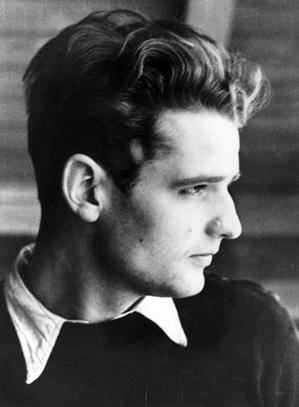 Around this time, Hans, together with his friends Alexander Schmorell and George Wittenstein, decided that they had to do something to resist the evil of the National Socialist regime, they could remain silent no longer. Rather than engaging in violence, having been encouraged by the sermons of Bishop von Galen, they decided to engage in a leaflet campaign to influence the German people against the war and the regime. They took the name of the White Rose, and they cautiously added like-minded students, including Willi Graf, Christoph Probst, Traute Lafrenz, Katharina Schueddekopf, Lieselotte (Lilo) Berndl, Jurgen Wittenstein, Marie-Luise Jahn, Falk Harnack, Kurt Huber, and Wilhelm Geyer. When Sophie later learned of the formation of the group, she insisted on joining too.
In June and July 1942, the White Rose distributed four leaflets condemning the war and Nazis. The leaflets were copied by typewriter and distributed by leaving copies in public phonebooks, mailing them to various people, and sending them by secret courier to other schools.
However, Hans and some others were then ordered to the Russian Front. While there, they saw the horrifying maltreatment of Jews and Russian prisoners first hand, and when they returned home a few months later, they more determined than ever to carry on the work of resistance. They obtained a duplicating machine, so instead of a hundred copies of their leaflets, they could now produce thousands. Their only limitation was on their supply of paper, envelopes, and postage stamps.
In January 1943, the fifth leaflet of the White Rose was published and copies were mailed to people whose names were taken out of telephone books. A short time later, the group struck with an anti-Nazi graffiti campaign around Munich. The words "Down with Hitler" and calls for "Freedom" were posted in large letters in paint and tar, which made it difficult to remove.
On February 18, 1943, after a Nazi leader had given a contentious speech at the University of Munich calling on female students to produce children for der Führer rather than waste their time on books, the group addressed their sixth leaflet to "Fellow Students," and they decided to not only mail copies anonymously, but to distribute them secretly at the University. White Rose member George Wittenstein reports what happened:
In the morning of February 18, 1943, Hans and Sophie Scholl entered the University with a large suitcase filled with leaflets, placing stacks of them outside each lecture hall. As they left the building, they realized there were many leaflets left in the suitcase. They turned, climbed the stairs to the top landing of the glass roofed inner court, where Sophie dumped the remaining content of the suitcase into the court.Hans and Sophie knew the risk. Shortly before, Sophie remarked, "So many people have already died for this regime that it's time someone died against it." Following their arrest, Sophie was questioned by Gestapo interrogator Robert Mohr, and in her confrontation with this agent of an evil regime, she heroically showed herself to be fortified by faith, hope, and love.
They were observed and immediately apprehended by a senior janitor. Within a few days over 80 people were arrested all over Germany, among them Christoph Probst, whose draft of a leaflet, written on January 31, was found in Hans Scholl's pocket at his arrest. . . .
It will never be known what drove Hans and Sophie to this action, which, according to statements made by them during their interrogation, had not been planned. It has been speculated that they knew that the Gestapo was hot on their trail, and that they, encouraged by what had happened a month earlier at the German Museum, believed that this last desperate act would result in a general uprising in Germany. . . .
Hitler's reaction was swift - the "People's Court" was called into session only four days later; and, in a trial lasting barely four hours, the two Scholls and Christoph Probst were sentenced to death by beheading.
Her love of what is right and good and just, building on rock by placing her faith in God, rather than in a twisted anti-God despot who offered only the hopelessness of Hell to the people of the world, gave Sophie the grace and fortitude to defiantly shine the light of truth on the evils of Hitler and the Nazis. Rather than be made an example of "the supremacy of Nazi justice," Sophie turned the tables on Mohr and at her subsequent trial, striking at the depths of their souls and forcing them to confront their consciences.
_____________________
Upcoming: excerpts of the leaflets of the White Rose, leaflets 1-5 and leaflet 6
relevant works of Blessed John Henry Newman (here) and Blessed Clemens August von Galen (here and here)
See also: Protest of Youth - The White Rose, by Anton Gill
Memories of the White Rose, by George J. Wittenstein, M.D.
Alexander Schmorell and the White Rose, by Jim Forest
The White Rose: A Lesson in Dissent, by Jacob G. Hornberger
World War II: The White Rose, by Kennedy Hickman
Sophie Scholl: A Life of Courage, by Wendy McElroy
The White Rose, by Fr. John Murray, The Sacred Heart Messenger
Newman, Sophie Scholl, and Joseph Ratzinger, by Carl Olson, Ignatius Press
Woman who defied Hitler ‘was inspired by Newman’, by Simon Caldwell
Scholar: Newman inspired resistance, by Simon Caldwell
The student who took a stand against the Reich, by Simon Caldwell
Sophie Scholl, Holocaust Research Project
.
Tuesday, May 31, 2011
On Resistance to Evil
The last offering of Cinema Catechism for the Winter/Spring 2011 series is Sophie Scholl: The Final Days, about the courageous young woman who, as part of the White Rose resistance group, sought to awaken the conscience of the German people to turn against the Nazi regime. In helping to form the White Rose, Sophie had been highly influenced by Blessed John Henry Newman and his "theology of conscience," as well as the "Lion of Münster," Blessed Clemens August von Galen, the Catholic bishop of Münster who forcefully spoke out against Nazi policies.
While in law school at The Catholic University of America, lo these many years ago, I wrote a paper entitled Christian Social Protest, which discusses many of the issues that are involved when a person of good will is faced with having to interact with evil, taking into consideration the moral obligation to submit to lawful authority (see CCC 2238-41), giving unto Caesar what is Caesar's, but at the same time, giving to God what is God's (Mt 22:21). The paper dealt with Christian martyrs, some contemporary examples of non-violent protest, such as Martin Luther King, and the obligations of moral truth and "higher law," but did not include Sophie Scholl (I did not know about her at the time). Still, some of the thoughts and questions are pertinent to the issue -- What does one do, what should one do, what can one do, when faced with evil?
These are not purely theoretical or academic questions. Evil abounds in our present-day society, not the least of which is the culture of death, including the on-going legally-protected (and even publicly financed) slaughter of the innocents, as well as other societal-government assaults on the sanctity and dignity of human life.
While in law school at The Catholic University of America, lo these many years ago, I wrote a paper entitled Christian Social Protest, which discusses many of the issues that are involved when a person of good will is faced with having to interact with evil, taking into consideration the moral obligation to submit to lawful authority (see CCC 2238-41), giving unto Caesar what is Caesar's, but at the same time, giving to God what is God's (Mt 22:21). The paper dealt with Christian martyrs, some contemporary examples of non-violent protest, such as Martin Luther King, and the obligations of moral truth and "higher law," but did not include Sophie Scholl (I did not know about her at the time). Still, some of the thoughts and questions are pertinent to the issue -- What does one do, what should one do, what can one do, when faced with evil?
These are not purely theoretical or academic questions. Evil abounds in our present-day society, not the least of which is the culture of death, including the on-going legally-protected (and even publicly financed) slaughter of the innocents, as well as other societal-government assaults on the sanctity and dignity of human life.
Christianity has always been a religion at odds with the existing social and government structures. Despite the admonition from St. Paul and others to submit to authority, the Judeo-Christian tradition has often been one of defying authority when it is perceived that it has gone too far. While man should give unto Caesar what is Caesar's, Christians have occasionally restricted the scope of Caesar's power and militantly resisted.
The most striking examples, of course, are the martyrs. From Maccabees to St. Stephen to Polycarp to St. Thomas More, Christians have oft been willing to accept worldly death, rather than submit to a government power that is perceived to be oppressive, evil, or offensive to the teachings of the Church.
The martyrs gave their lives, often in gory, gruesome, and violent ways. Dismemberment, stoning, set on fire, beheaded, scourged, roasted on a spit, and fed to wild beasts, the martyrs have for two thousand years been an inspiration to those faithful who believe that their cross is too much to bear. If they can endure, then those facing lesser threats surely can.
Of course, many, many more faithful were never martyred, or even threatened with martyrdom, but they did suffer persecution, either directly, or indirectly through oppression. But these saints are no less worthy of imitation or inspiration to those facing trials and the need to defend the faith, and the faithful.
Recent times have seen the rise of modern social protest. . . . Many of the participants in these movements have thought of themselves, if only in a spirit of humility, as carrying on the work of the persecuted and martyred. Many of these protesters do so, not by free choice, but because they believe they have a penitential duty to do so. Thus, they often seek to imitate the perseverance of the martyrs, and proclaim themselves willing to endure any hardship to promote the teachings of Christ, that is, justice, truth, the obligation to do good and avoid evil, and the protection of the intrinsic dignity of the human person, upon which society depends.
Are these groups justified in basing their actions on the Christian thought, in light of the martyrs? After all, martyrdom is not something one is supposed to go out and seek. Are they acting in a Christian way? Is their way, or the Christian way justified in today's pluralistic civil society? Or are these groups an instrument of evil? Do they make people turn away from truth, despite their "good" intentions? . . .
Those who resort to extralegal direct action generally do so, not out of disrespect for the law, but because they value true law and true justice above all else. But they cannot be idle bystanders, witnesses to injustice without acting to avert it. That acting may violate some earthly law is of no import to these persons, since the they do not justify their acts in mere positive law. As St. Augustine said in Free Choice of the Will, "Do you think that, for men who are eager not only to believe but also to understand, we must fall back on the authority of the law?"
Indeed, it was recognized by all the world at Nuremberg that occasionally, one has a duty to resist unjust laws which violate inalienable human rights, claims of constitutional supremacy notwithstanding. The ruling of the International Military Tribunal was clear, even if the positive law of the nation legalized certain practices, one could not complain of his later prosecution for acts which were nonetheless mala in se, "Individuals have international duties which transcend national obligations of obedience imposed by the individual state." United States v. Goering et al., 6 F.R.D. 69, 110 (1946). Crimes against humanity are punishable "whether or not in violation of the domestic law of the country where perpetrated." Charter of the International Tribunal, 59 Stat. 1544, 82 U.N.T.S. 279, 287-88.
Martin Luther King, in his Letter from the Birmingham Jail, answered those who supported his cause, but opposed his methods, believing that the oppressed Blacks should go on obeying the "laws" no matter what. In their doing so, however, they clearly had a poor conception of what law is. Borrowing from Catholic teaching, King pointed out that an unjust law was no law at all and that one who values the true eternal law, may in good conscience resist the positive civil law to help raise the conscience of the community and is really showing the highest respect for the law."[T]here are two types of laws: just and unjust. I would be the first to advocate obeying just laws. One has not only a legal but a moral responsibility to obey just laws. Conversely, one has a moral responsibility to disobey unjust laws. I would agree with St. Augustine that 'An unjust law is no law at all.' . . . Any law that uplifts human personality is just. Any law that degrades human personality is unjust. . . .
One who breaks an unjust law must do so openly, lovingly, and with a willingness to accept the penalty. I submit that an individual who breaks a law that conscience tells him is unjust, and who willingly accepts the penalty of imprisonment in order to arouse the conscience of the community over it injustice, is in reality expressing the highest respect for law."To be sure, Christians have a duty to admonish other Christians when they go astray and to help them in the formation of their conscience. (cf. Ezekiel 3:18-20; Galatians 6:1)
The teachings of the martyrs are "intended to encourage Christians to stand firm against Satan's wiles in the knowledge that God's will is being done." (The Martyrdom of Polycarp) The examples of the early Christians involved "passive submission to the State where necessary, indifference where possible, and nonviolent resistance where the State made demands that would compromise the Christians prime allegiance to God." (Christian Ethics 49 (Beach and Niebuhr eds., 2d ed., 1973))
The Catholic Church teaches that there is obviously a proper place for morality in society and the law. But when society fails in this, then it is no longer legitimate. [In Donum Vitae, then-Cardinal Ratzinger writes],"The task of the civil law is to ensure the common good of people through the recognition of and the defense of fundamental rights and through the promotion of peace and of public morality. In no sphere of life can the civil law take the place of conscience or dictate norms concerning things which are outside its competence. It must sometimes tolerate, for the sake of public order, things which it cannot forbid without a greater evil resulting. However, the inalienable rights of the person must be recognized and respected by civil society and the political authority. These human rights depend neither on single individuals nor on parents; nor do they represent a concession made by society and the State: they pertain to human nature and are inherent in the person by virtue of the creative act from which the person took his of her origin. . . . the moment a positive law deprives a category of human beings of the protection which civil legislation must accord them, the State is denying the equality of all before the law. When the State does not place its power at the service of the rights of each citizen, and in particular of the more vulnerable, the very foundations of a State based on law are undermined."
Indeed, in its teaching on respect for human life in its origin, the Church has taken note of resistance to those laws and practices which violate the inherent dignity of the human person, and has seemingly given its tacit approval.
The civil legislation of many states confers an undue legitimation upon certain practices in the eyes of many today; it is seen to be incapable of guaranteeing that morality which is in conformity with the natural exigencies of the human person and with the "unwritten laws" etched by the Creator upon the human heart. All men of good will must commit themselves, particularly within their professional field and in the exercise of their civil rights, to ensuring the reform of morally unacceptable civil laws and the correction of illicit practices. In addition, "conscientious objection" vis-à-vis such laws must be supported and recognized. A movement of passive resistance to the legitimation of practices contrary to human life and dignity is beginning to make an ever sharper impression upon the moral conscience of many, especially among specialists in the biomedical sciences. (Donum Vitae)
Whether social protest in a given situation is justified or not, the mere fact that it violates existing positive civil law is not in itself evidence of wrongfulness. As St. Augustine pointed out in Free Choice of the Will, the history of the Christian church is one of resistance to putative civil authority.* To look at an action and to say it is wrong because it violates some civil law is to get the problem backwards. An act is not wrong because the law forbids it; rather the law forbids (or rather should forbid) it because it is are wrong. . . .
The Church has always taught that each human life is infinitely valuable and that man must love his neighbor as himself. . . . lack of resistance in many cases only adds to the problem and has the effect of causing others to be apathetic and to simply go along with evil. [And simply acquiescing in evil by not resisting it has gravely negative effects.]
St. Augustine teaches that evil results from freely choosing to be ignorant and by turning away from Truth. Those that choose to turn away from this truth, must then live in darkness and slavery to error.
Society today asks man to embrace moral relativism, just as Polycarp was asked, "'what is wrong with saying 'Caesar is Lord,' and sacrificing, and so forth, and thus being saved?'" Since the time of modernity, positivism, existentialism, and utilitarianism, it has been claimed that "God is dead." Anyone giving only a cursory look at society today cannot help but note that, whether God is dead or not, contemporary society has abandoned concepts of God, morality and truth, in favor of moral relativism, pluralistic truth, and situational ethics. Many in society today have embraced materialism, hedonism and decadence, through their own free choice. And that, of course, is the catch-phrase of the abortion rights movement, "freedom of choice."
However, this choice can lead only to misery when the choice is ignorance, as St. Augustine points out in Free Choice of the Will, "when we say that men are unhappy by their own choice, we are not saying they want to be unhappy but that their will is such that unhappiness results of necessity and even against their will."
It is clear from looking at society today, with [50] million abortions since 1973, millions of children born out of wedlock, millions of broken families, unheard of sexual promiscuity, perversion and excess, as well as rampant divorce, drug use, sexually transmitted disease, that man is reaping what he has sown. It is a just punishment, St. Augustine says, for man has chosen evil.** . . .
As is clear from the above discussion, social order has broken down. This lack of order is evidence of turning away from the eternal law, from which whatever is just and lawful in the temporal law is derived, and which is impressed upon man's nature. . . . As such, social protest would be necessary to restore that order to man's intrinsic nature. . . .
________________________
Footnotes -
* "Ev. I think it is wrong for the reason that I have often seen men condemned for such a crime.
"Aug. What of the fact that men have often been condemned for good deeds? Without sending you to other books, examine that history which owes its excellence to divine authority. You will find what a bad opinion we should have of the Apostles and all the martyrs if we agree that being condemned is a sure indication of wrongdoing, for they were all judged as deserving of condemnation for having confessed their faith. Consequently, if whatever is condemned is evil, then it was evil at that time to believe in Christ and to confess the faith itself." St. Augustine, Free Choice of the Will.
** "Aug. [W]hatever that nature is which rightfully excels a mind adorned with virtue, it cannot possibly be unjust. Consequently, though it were within its power to do so, not even this nature will force the mind to become a slave to passion. . . . where passion lords it over the mind, dragging it about, poor and needy, in different directions, stripped of its wealth of virtue, now mistaking the false for the true, even defending something vigorously at one time only to reject at another what it had previously demonstrated, while all the while it rushes headlong into other false judgment; now withholding all assent, while fearful for the most part of the clearest demonstrations; no in despair of the whole business of finding the truth while it clings tenaciously to the darkness of its folly; now at pains to see the light and understand, and again falling back out of weariness to the darkness? And all the while, the cruel tyranny of evil desire holds sway, disrupting the entire soul and life of man by various and conflicting surges of passion; here by fear, there by desire, here by anxiety, there by empty and spurious delights; here by torment over the loss of a loved object, there by a burning desire to acquire something not possessed; here by pain for an injury received, there by the urge to revenge an injury. On every possible side, the mind is shriveled up by greed, wasted away by sensuality, a slave to ambition, is inflated by pride, tortured by envy, deadened by sloth, kept in turmoil by obstinacy, and distressed by its condition of subjugation. And so with other countless impulses that surround and plague the rule of passion. How could we ever think that this is not a punishment when, as you see, it is something that all have to suffer who do not hold fast to wisdom?
"Ev. I do indeed consider this a heavy penalty and one that is absolutely just, if a man, who once occupied the summit of wisdom, should choose to descend therefrom and become the slave of passion. . . . [but] man was so perfectly created by God and established in happiness that it was only by his own will that he fell from this state into the miseries of this mortal life." Free Choice of the Will
Sophie Scholl and the White Rose confronted the great evil that was National Socialism. Despite the cries of "never again" after World War II, there are some who seem to think that Hitler and the Nazis so epitomized evil that if a situation does not rise to the level of exterminating six million Jews and millions of others, then it is not really so great an evil. As such, they acquiesce in any number of horrors and "never again" becomes "once again."
It might be true that the United States will never face a regime bent on genocidal extermination and totalitarian rule, but that really is not the standard for resistance, is it? How many must be denied basic human dignity (or even be denied their very humanity in law) before a person's conscience is awakened and he is spurred to act against the evil and for the good?
While the question of how to act might be difficult to answer, the questions of whether to act, whether to resist should not be. We have an obligation, written as law upon our hearts, to do good and avoid evil. One cannot stand idly by in the face of evil. (See CCC 2242 and Evangelium Vitae 70 et seq.) To simply go along and avoid having to confront evil can quickly become cooperation with evil, especially since evil often will not leave you alone, but will demand your involvement and approval. And one cannot simply say, "let God take care of it." God has already taken care of much of it -- Jesus has commissioned us to go out and be a light to a dark world -- God takes care of it through us.
At the very least, we have an obligation in charity to first admit the truth, and then to speak the truth, in opposition to evil. Here in the United States we probably will never face a totalitarian regime such as that in Nazi Germany. But if Sophie Scholl was willing risk her life, and ultimately give it, to speak the truth so as to awake the conscience of the German people, should not we at least be willing to speak the truth when we are faced with "lesser" evils?
This much is certain: Doing nothing in the face of evil is not an option.
.
It might be true that the United States will never face a regime bent on genocidal extermination and totalitarian rule, but that really is not the standard for resistance, is it? How many must be denied basic human dignity (or even be denied their very humanity in law) before a person's conscience is awakened and he is spurred to act against the evil and for the good?
While the question of how to act might be difficult to answer, the questions of whether to act, whether to resist should not be. We have an obligation, written as law upon our hearts, to do good and avoid evil. One cannot stand idly by in the face of evil. (See CCC 2242 and Evangelium Vitae 70 et seq.) To simply go along and avoid having to confront evil can quickly become cooperation with evil, especially since evil often will not leave you alone, but will demand your involvement and approval. And one cannot simply say, "let God take care of it." God has already taken care of much of it -- Jesus has commissioned us to go out and be a light to a dark world -- God takes care of it through us.
At the very least, we have an obligation in charity to first admit the truth, and then to speak the truth, in opposition to evil. Here in the United States we probably will never face a totalitarian regime such as that in Nazi Germany. But if Sophie Scholl was willing risk her life, and ultimately give it, to speak the truth so as to awake the conscience of the German people, should not we at least be willing to speak the truth when we are faced with "lesser" evils?
This much is certain: Doing nothing in the face of evil is not an option.
.
Sunday, February 13, 2011
Seeing with Eyes of Faith
What is the message of Lourdes?
The Lady of the Grotto spoke of penance and praying for sinners, as Our Lady of Fatima and the Virgin of Guadalupe had. She identified herself, "I am the Immaculate Conception." And through the visible sign of water, a sacramental sign and symbol of life, miraculous healing of the sick has occurred.
These events certainly happened, but are they the message of Lourdes?
At the Cinema Catechism viewing of the film Bernadette, it was suggested that perhaps the Message of Lourdes is Bernadette Soubirous herself, or more specifically, the simple faith and love of Bernadette.
At Massabielle, Bernadette was able to see what others could not see. At Massabielle, Bernadette was able to see what some others would not see.
One problem that we have in this fallen world is that we have become infected with a disease – a disease that leads us to see ourselves and others with the world's eyes – eyes that are false. We see superficial appearances, and not the truth of a person or thing. When we see with our eyes, our human and worldly eyes, we see a false reality, a false world, a false beauty. Our human eyes deceive us, so much so that Satan himself would be fantastically beautiful to us, rather than the corrupted being that he is, and as depicted in art with horns and a tail.
Our ability to see and know what truth is has been corrupted and distorted, so that even those who have a good faith desire to know and live the truth often times are instead living a perversion of the truth. Even when, deep down in our gut, we know that something isn't quite right, we still cling to the lie, thinking it is the truth, indeed, wanting it to be the truth.
Conversely, we are often blind to true beauty, and other times we think that what is truly beautiful is abhorrent. The Lord walked the earth for 30 years before beginning His ministry and practically no one recognized Him. The world demands prove from God, putting Him to the test, but when He sends us signs and signals and performs mighty deeds to get our attention, the world pays no attention to Him.
There are those who cannot see truly, and there are those who will not see truly, who obstinately refuse to see. There are those who have been made blind, those who have unwittingly followed others into the dark cave, and those who have plucked out their own eyes and seek to blind others. The fallen world consistently seeks to have you disbelieve and have doubts. The world whispers in your ear, imitating the voice of your subconscious, "God doesn’t exist. And if He does, He has abandoned you. He cannot be trusted. You can only trust yourself."
However, not everyone is blind, not everyone is unable to see. The Virgin Mary was and is able to see, and Bernadette was able to see her. That is because Bernadette did not seek to see merely with the eyes of the head, merely with worldly eyes. Because of her simple humble faith, she also saw with the heart, which in turn allowed her to see the truest beauty God has ever made.
Innocence tends to allow one to see a higher truth. Eating the Fruit of the Tree of Knowledge does not necessarily give you greater sight. It merely infects you with a disease that blinds you. It is paradoxical, but often times, ignorance is learned.
The intellectual elite of Bernadette’s time were, for all their learning, ignorant. By their arrogant pride and hubris, by promoting extreme secular ideologies that have no need or want of God, these intellectuals had learned to be stupid. In their willful blindness, they refused to open themselves up to be able to see.
If we too want to see truly, we must seek to emulate the lowly Bernadette, rather than the prideful. We must believe, we must want to believe, in truth. We must have faith in God, rather than faith in ourselves as “gods,” so that we might see with our hearts. When we see with our hearts, which is to say, our souls, as illuminated by the true Light, we are able to see reality as it truly is, we are able to see true beauty, which may not correspond to what our human eyes find aesthetically pleasing. What is repugnant and ugly to our human eyes may be seen to be truly beautiful when viewed with our hearts.
But being able to see with our hearts is not easy. And it almost certainly cannot be done by our own efforts. We most likely need a little help. But if we at least want to be able to truly see, to be able to see with our hearts, and we seek that help, then we will begin to receive the grace to be able to do so. And the real beauty that we see will be more astounding than we could have ever imagined.
"How blind man is when he refuses to open his heart to the light of faith!"
-- Sister Marie-Bernard Soubirous
____________________
Why do some see and others not?
Homily of Pope Benedict XVI
Solemnity of the Epiphany, 6 January 2010
The Lady of the Grotto spoke of penance and praying for sinners, as Our Lady of Fatima and the Virgin of Guadalupe had. She identified herself, "I am the Immaculate Conception." And through the visible sign of water, a sacramental sign and symbol of life, miraculous healing of the sick has occurred.
These events certainly happened, but are they the message of Lourdes?
At the Cinema Catechism viewing of the film Bernadette, it was suggested that perhaps the Message of Lourdes is Bernadette Soubirous herself, or more specifically, the simple faith and love of Bernadette.
"When we follow the Jubilee Way in the footsteps of Bernadette, we are reminded of the heart of the message of Lourdes. Bernadette is the eldest daughter of a very poor family, with neither knowledge nor power, and in poor health. Mary chose her to transmit her message of conversion, prayer and penance, which is fully in accord with words of Jesus: 'What you have hidden from the wise and understanding, you have revealed to babes' (Mt 11:25)."(Homily of Pope Benedict XVI, Apostolic Journey to Lourdes, 14 September 2008)
At Massabielle, Bernadette was able to see what others could not see. At Massabielle, Bernadette was able to see what some others would not see.
One problem that we have in this fallen world is that we have become infected with a disease – a disease that leads us to see ourselves and others with the world's eyes – eyes that are false. We see superficial appearances, and not the truth of a person or thing. When we see with our eyes, our human and worldly eyes, we see a false reality, a false world, a false beauty. Our human eyes deceive us, so much so that Satan himself would be fantastically beautiful to us, rather than the corrupted being that he is, and as depicted in art with horns and a tail.
Our ability to see and know what truth is has been corrupted and distorted, so that even those who have a good faith desire to know and live the truth often times are instead living a perversion of the truth. Even when, deep down in our gut, we know that something isn't quite right, we still cling to the lie, thinking it is the truth, indeed, wanting it to be the truth.
Conversely, we are often blind to true beauty, and other times we think that what is truly beautiful is abhorrent. The Lord walked the earth for 30 years before beginning His ministry and practically no one recognized Him. The world demands prove from God, putting Him to the test, but when He sends us signs and signals and performs mighty deeds to get our attention, the world pays no attention to Him.
There are those who cannot see truly, and there are those who will not see truly, who obstinately refuse to see. There are those who have been made blind, those who have unwittingly followed others into the dark cave, and those who have plucked out their own eyes and seek to blind others. The fallen world consistently seeks to have you disbelieve and have doubts. The world whispers in your ear, imitating the voice of your subconscious, "God doesn’t exist. And if He does, He has abandoned you. He cannot be trusted. You can only trust yourself."
However, not everyone is blind, not everyone is unable to see. The Virgin Mary was and is able to see, and Bernadette was able to see her. That is because Bernadette did not seek to see merely with the eyes of the head, merely with worldly eyes. Because of her simple humble faith, she also saw with the heart, which in turn allowed her to see the truest beauty God has ever made.
Innocence tends to allow one to see a higher truth. Eating the Fruit of the Tree of Knowledge does not necessarily give you greater sight. It merely infects you with a disease that blinds you. It is paradoxical, but often times, ignorance is learned.
The intellectual elite of Bernadette’s time were, for all their learning, ignorant. By their arrogant pride and hubris, by promoting extreme secular ideologies that have no need or want of God, these intellectuals had learned to be stupid. In their willful blindness, they refused to open themselves up to be able to see.
If we too want to see truly, we must seek to emulate the lowly Bernadette, rather than the prideful. We must believe, we must want to believe, in truth. We must have faith in God, rather than faith in ourselves as “gods,” so that we might see with our hearts. When we see with our hearts, which is to say, our souls, as illuminated by the true Light, we are able to see reality as it truly is, we are able to see true beauty, which may not correspond to what our human eyes find aesthetically pleasing. What is repugnant and ugly to our human eyes may be seen to be truly beautiful when viewed with our hearts.
But being able to see with our hearts is not easy. And it almost certainly cannot be done by our own efforts. We most likely need a little help. But if we at least want to be able to truly see, to be able to see with our hearts, and we seek that help, then we will begin to receive the grace to be able to do so. And the real beauty that we see will be more astounding than we could have ever imagined.
"How blind man is when he refuses to open his heart to the light of faith!"
-- Sister Marie-Bernard Soubirous
____________________
Why do some see and others not?
Homily of Pope Benedict XVI
Solemnity of the Epiphany, 6 January 2010
Believers in Jesus Christ always seem to be few. Many have seen the star, but few have understood its message. Scripture scholars of Jesus' time knew the word of God perfectly. They were able to say without any difficulty what was to be found in Scripture regarding the place in which the Messiah would be born, but, as St. Augustine says, "as the milestones (that indicate the way), they remained inert and immovable" (Sermon 199. In Epiphania Domini, 1, 2).
Hence, we can ask ourselves: What is the reason that some see and others do not? What is it that opens the eyes and heart? What is missing in those who remain indifferent, from those who indicate the way but do not move?
We can answer: the excessive certainty in themselves, the pretension of knowing reality perfectly, the presumption of already having formulated a definitive judgment on things, thus making their hearts closed and insensitive to the novelty of God. They are certain of the idea they have of the world and do not let themselves be moved in their deepest being by the adventure of a God who wants to meet them. They place more confidence in themselves than in Him, and they do not consider it possible that God, being so great, can make Himself small, that He can really come close to us.
In the end, what is missing is genuine humility, which is able to submit to what is greater, but also the genuine courage that leads one to believe what is really great, even if it is manifested in a defenseless child.
Lacking is the capacity to be children at heart, to be amazed, and to come out of oneself to undertake the way indicated by the star, the way of God. Nevertheless, the Lord has the power to make us able to see and to save us. Therefore, we want to ask Him to give us a wise and innocent heart, which will allow us to see the star of His mercy, which will lead us on his way, to meet Him and be inundated by the great light and the true joy that He has brought to this world. Amen.
Saturday, October 16, 2010
Theological Commentary on Fatima
Joseph Cardinal Ratzinger, Prefect
Congregation for the Doctrine of the Faith
Congregation for the Doctrine of the Faith
A careful reading of the text of the so-called third “secret” of Fatima, published here in its entirety long after the fact and by decision of the Holy Father, will probably prove disappointing or surprising after all the speculation it has stirred. No great mystery is revealed; nor is the future unveiled. We see the Church of the martyrs of the century which has just passed represented in a scene described in a language which is symbolic and not easy to decipher..
Is this what the Mother of the Lord wished to communicate to Christianity and to humanity at a time of great difficulty and distress? Is it of any help to us at the beginning of the new millennium? Or are these only projections of the inner world of children, brought up in a climate of profound piety but shaken at the same time by the tempests which threatened their own time? How should we understand the vision? What are we to make of it?
Public Revelation and private revelations – their theological status
Before attempting an interpretation, the main lines of which can be found in the statement read by Cardinal Sodano on 13 May of this year at the end of the Mass celebrated by the Holy Father in Fatima, there is a need for some basic clarification of the way in which, according to Church teaching, phenomena such as Fatima are to be understood within the life of faith. The teaching of the Church distinguishes between “public Revelation” and “private revelations.” The two realities differ not only in degree but also in essence. The term “public Revelation” refers to the revealing action of God directed to humanity as a whole and which finds its literary expression in the two parts of the Bible: the Old and New Testaments. . . .
1. The authority of private revelations is essentially different from that of the definitive public Revelation. The latter demands faith; in it in fact God himself speaks to us through human words and the mediation of the living community of the Church. Faith in God and in His word is different from any other human faith, trust or opinion. The certainty that it is God who is speaking gives me the assurance that I am in touch with truth itself. It gives me a certitude which is beyond verification by any human way of knowing. It is the certitude upon which I build my life and to which I entrust myself in dying.
2. Private revelation is a help to this faith, and shows its credibility precisely by leading me back to the definitive public Revelation. In this regard, Cardinal Prospero Lambertini, the future Pope Benedict XIV, says in his classic treatise, which later became normative for beatifications and canonizations: “An assent of Catholic faith is not due to revelations approved in this way; it is not even possible. These revelations seek rather an assent of human faith in keeping with the requirements of prudence, which puts them before us as probable and credible to piety.” The Flemish theologian E. Dhanis, an eminent scholar in this field, states succinctly that ecclesiastical approval of a private revelation has three elements: the message contains nothing contrary to faith or morals; it is lawful to make it public; and the faithful are authorized to accept it with prudence. . . . Such a message can be a genuine help in understanding the Gospel and living it better at a particular moment in time; therefore it should not be disregarded. It is a help which is offered, but which one is not obliged to use.
The criterion for the truth and value of a private revelation is therefore its orientation to Christ himself. When it leads us away from him, when it becomes independent of him or even presents itself as another and better plan of salvation, more important than the Gospel, then it certainly does not come from the Holy Spirit, who guides us more deeply into the Gospel and not away from it. This does not mean that a private revelation will not offer new emphases or give rise to new devotional forms, or deepen and spread older forms. But in all of this there must be a nurturing of faith, hope and love, which are the unchanging path to salvation for everyone. . . .
In the private revelations approved by the Church — and therefore also in Fatima — this is the point: they help us to understand the signs of the times and to respond to them rightly in faith. . . .
In this field, theological anthropology distinguishes three forms of perception or “vision”: vision with the senses, and hence exterior bodily perception, interior perception, and spiritual vision (visio sensibilis - imaginativa - intellectualis). It is clear that in the visions of Lourdes, Fatima and other places it is not a question of normal exterior perception of the senses: the images and forms which are seen are not located spatially, as is the case for example with a tree or a house. . . . It is also clear that it is not a matter of a “vision” in the mind, without images, as occurs at the higher levels of mysticism. Therefore we are dealing with the middle category, interior perception. . . .
“Interior vision” is not fantasy but, as we have said, a true and valid means of verification. But it also has its limitations. Even in exterior vision the subjective element is always present. We do not see the pure object, but it comes to us through the filter of our senses, which carry out a work of translation. This is still more evident in the case of interior vision, especially when it involves realities which in themselves transcend our horizon. The subject, the visionary, is still more powerfully involved. He sees insofar as he is able, in the modes of representation and consciousness available to him. In the case of interior vision, the process of translation is even more extensive than in exterior vision, for the subject shares in an essential way in the formation of the image of what appears. He can arrive at the image only within the bounds of his capacities and possibilities. Such visions therefore are never simple “photographs” of the other world, but are influenced by the potentialities and limitations of the perceiving subject.
This can be demonstrated in all the great visions of the saints; and naturally it is also true of the visions of the children at Fatima. The images described by them are by no means a simple expression of their fantasy, but the result of a real perception of a higher and interior origin. But neither should they be thought of as if for a moment the veil of the other world were drawn back . . . Rather the images are, in a manner of speaking, a synthesis of the impulse coming from on high and the capacity to receive this impulse in the visionaries, that is, the children. For this reason, the figurative language of the visions is symbolic. In this regard, Cardinal Sodano stated: “[they] do not describe photographically the details of future events, but synthesize and compress against a single background facts which extend through time in an unspecified succession and duration.” . . .
An attempt to interpret the “secret” of Fatima
The first and second parts of the “secret” of Fatima have already been so amply discussed in the relative literature that there is no need to deal with them again here. I would just like to recall briefly the most significant point. For one terrible moment, the children were given a vision of hell. They saw the fall of “the souls of poor sinners.” And now they are told why they have been exposed to this moment: “in order to save souls” — to show the way to salvation. . . .
Thus we come finally to the third part of the “secret” of Fatima which for the first time is being published in its entirety. As is clear from the documentation presented here, the interpretation offered by Cardinal Sodano in his statement of 13 May was first put personally to Sister Lucia. Sister Lucia responded by pointing out that she had received the vision but not its interpretation. The interpretation, she said, belonged not to the visionary but to the Church. After reading the text, however, she said that this interpretation corresponded to what she had experienced and that on her part she thought the interpretation correct . . .
“To save souls” has emerged as the key word of the first and second parts of the “secret,” and the key word of this third part is the threefold cry: “Penance, Penance, Penance!” The beginning of the Gospel comes to mind: “Repent and believe the Good News” (Mk 1:15).
To understand the signs of the times means to accept the urgency of penance – of conversion – of faith. This is the correct response to this moment of history, characterized by the grave perils outlined in the images that follow. Allow me to add here a personal recollection: in a conversation with me Sister Lucia said that it appeared ever more clearly to her that the purpose of all the apparitions was to help people to grow more and more in faith, hope and love — everything else was intended to lead to this.
Let us now examine more closely the single images. The angel with the flaming sword on the left of the Mother of God recalls similar images in the Book of Revelation. This represents the threat of judgment which looms over the world. Today the prospect that the world might be reduced to ashes by a sea of fire no longer seems pure fantasy: man himself, with his inventions, has forged the flaming sword.
The vision then shows the power which stands opposed to the force of destruction — the splendour of the Mother of God and, stemming from this in a certain way, the summons to penance. In this way, the importance of human freedom is underlined: the future is not in fact unchangeably set, and the image which the children saw is in no way a film preview of a future in which nothing can be changed. Indeed, the whole point of the vision is to bring freedom onto the scene and to steer freedom in a positive direction. The purpose of the vision is not to show a film of an irrevocably fixed future. Its meaning is exactly the opposite: it is meant to mobilize the forces of change in the right direction. Therefore we must totally discount fatalistic explanations of the “secret,” such as, for example, the claim that the would-be assassin of 13 May 1981 was merely an instrument of the divine plan guided by Providence and could not therefore have acted freely, or other similar ideas in circulation. Rather, the vision speaks of dangers and how we might be saved from them.
The next phrases of the text show very clearly once again the symbolic character of the vision: God remains immeasurable, and is the light which surpasses every vision of ours. Human persons appear as in a mirror. We must always keep in mind the limits in the vision itself, which here are indicated visually. The future appears only “in a mirror dimly” (1 Cor 13:12).
Let us now consider the individual images which follow in the text of the “secret.” The place of the action is described in three symbols: a steep mountain, a great city reduced to ruins and finally a large rough-hewn cross. The mountain and city symbolize the arena of human history: history as an arduous ascent to the summit, history as the arena of human creativity and social harmony, but at the same time a place of destruction, where man actually destroys the fruits of his own work. The city can be the place of communion and progress, but also of danger and the most extreme menace. On the mountain stands the cross — the goal and guide of history. The cross transforms destruction into salvation; it stands as a sign of history's misery but also as a promise for history.
At this point human persons appear: the Bishop dressed in white (“we had the impression that it was the Holy Father”), other Bishops, priests, men and women Religious, and men and women of different ranks and social positions. The Pope seems to precede the others, trembling and suffering because of all the horrors around him. Not only do the houses of the city lie half in ruins, but he makes his way among the corpses of the dead. The Church's path is thus described as a Via Crucis, as a journey through a time of violence, destruction and persecution. The history of an entire century can be seen represented in this image. Just as the places of the earth are synthetically described in the two images of the mountain and the city, and are directed towards the cross, so too time is presented in a compressed way.
In the vision we can recognize the last century as a century of martyrs, a century of suffering and persecution for the Church, a century of World Wars and the many local wars which filled the last fifty years and have inflicted unprecedented forms of cruelty. In the “mirror” of this vision we see passing before us the witnesses of the faith decade by decade. . . .
In the Via Crucis of an entire century, the figure of the Pope has a special role. In his arduous ascent of the mountain we can undoubtedly see a convergence of different Popes. Beginning from Pius X up to the present Pope, they all shared the sufferings of the century and strove to go forward through all the anguish along the path which leads to the Cross.
In the vision, the Pope too is killed along with the martyrs. When, after the attempted assassination on 13 May 1981, the Holy Father had the text of the third part of the “secret” brought to him, was it not inevitable that he should see in it his own fate? He had been very close to death, and he himself explained his survival in the following words: “... it was a mother's hand that guided the bullet's path and in his throes the Pope halted at the threshold of death” (13 May 1994). That here “a mother's hand” had deflected the fateful bullet only shows once more that there is no immutable destiny, that faith and prayer are forces which can influence history and that in the end prayer is more powerful than bullets and faith more powerful than armies.
The concluding part of the “secret” uses images which Lucia may have seen in devotional books and which draw their inspiration from long-standing intuitions of faith. It is a consoling vision, which seeks to open a history of blood and tears to the healing power of God. Beneath the arms of the cross, angels gather up the blood of the martyrs, and with it they give life to the souls making their way to God. Here, the blood of Christ and the blood of the martyrs are considered as one: the blood of the martyrs runs down from the arms of the cross.
The martyrs die in communion with the Passion of Christ, and their death becomes one with his. For the sake of the body of Christ, they complete what is still lacking in his afflictions (cf. Col 1:24). Their life has itself become a Eucharist, part of the mystery of the grain of wheat which in dying yields abundant fruit. The blood of the martyrs is the seed of Christians, said Tertullian. As from Christ's death, from his wounded side, the Church was born, so the death of the witnesses is fruitful for the future life of the Church.
Therefore, the vision of the third part of the “secret,” so distressing at first, concludes with an image of hope: no suffering is in vain, and it is a suffering Church, a Church of martyrs, which becomes a sign-post for man in his search for God. . . . From the suffering of the witnesses there comes a purifying and renewing power, because their suffering is the actualization of the suffering of Christ himself and a communication in the here and now of its saving effect.
And so we come to the final question: What is the meaning of the “secret” of Fatima as a whole (in its three parts)? What does it say to us?
First of all we must affirm with Cardinal Sodano: “... the events to which the third part of the ‘secret' of Fatima refers now seem part of the past.” Insofar as individual events are described, they belong to the past. Those who expected exciting apocalyptic revelations about the end of the world or the future course of history are bound to be disappointed. Fatima does not satisfy our curiosity in this way, just as Christian faith in general cannot be reduced to an object of mere curiosity. What remains was already evident when we began our reflections on the text of the “secret”: the exhortation to prayer as the path of “salvation for souls” and, likewise, the summons to penance and conversion.
I would like finally to mention another key expression of the “secret” which has become justly famous: “my Immaculate Heart will triumph.” What does this mean?
The Heart open to God, purified by contemplation of God, is stronger than guns and weapons of every kind. The fiat of Mary, the word of her heart, has changed the history of the world, because it brought the Saviour into the world — because, thanks to her Yes, God could become man in our world and remains so for all time.
The Evil One has power in this world, as we see and experience continually; he has power because our freedom continually lets itself be led away from God. But since God himself took a human heart and has thus steered human freedom towards what is good, the freedom to choose evil no longer has the last word. From that time forth, the word that prevails is this: “In the world you will have tribulation, but take heart; I have overcome the world” (Jn 16:33). The message of Fatima invites us to trust in this promise.
Church Teaching on Marian Apparitions and Other Private Revelations
It seems that an awful lot of people have been followers of places like Fatima and Lourdes, and the image of Our Lady of Guadalupe is everywhere. And now there are these claimed apparitions in Medjugorje. But I'm not sure about any of these. Does that make me a bad Catholic? Am I required to believe in these things?
Throughout history there have been supernatural apparitions and signs which go to the heart of human events. That is, throughout the ages, there have been so-called "private" revelations, including various appearances of the Blessed Virgin Mary, some of which have been recognized by the authority of the Church as being “worthy of belief,” but one is not “required” to believe in any of them.
"’The Christian economy, therefore, since it is the new and definitive Covenant, will never pass away; and no new public revelation is to be expected before the glorious manifestation of our Lord Jesus Christ.’ (Dei Verbum 4) Yet even if Revelation is already complete, it has not been made completely explicit; it remains for Christian faith gradually to grasp its full significance over the course of the centuries.” CCC 66
Private revelations “do not belong, however, to the deposit of faith. It is not their role to improve or complete Christ's definitive Revelation, but to help live more fully by it in a certain period of history. Guided by the Magisterium, the sensus fidelium knows how to discern and welcome in these revelations whatever constitutes an authentic call of Christ or his saints to the Church.” CCC 67
“While not belonging to the deposit of faith, private revelations may help a person to live the faith as long as they lead us to Christ. The Magisterium of the Church, which has the duty of evaluating such private revelations, cannot accept those which claim to surpass or correct that definitive Revelation which is Christ.” Comp. CCC 10
Again, there have been thousands of claimed apparitions and visions of Mary, Jesus, and others over the centuries. The Church does not investigate the vast majority of these and of those that are investigated, many are found to be false, especially when they are contrary to the deposit of faith. An apparition or vision might be false because it is outright fraudulent or a lie, or it might be a hallucination or the fanciful imagination of the seer or those around him or her. Or, when it is determined that the seer did, in fact, see something and receive some message, it might be that the vision is of demonic origin, not of divine.
But some apparitions and visions are found to be worthy of belief, including Fatima, Guadalupe (present-day Mexico), Lourdes (France), La Salette (France), appearances to St. Catherine Labouré (France), La Vang (Vietnam), Kibeho (Rwanda), the Divine Mercy visions of Jesus by Sr. Faustina (Poland), and others.
The claimed apparitions in Medjugorje, on the other hand, have not been found worthy of belief, rather, it is still an open question. The bishops of that diocese have voiced their opposition, but many prominent people and thousands of the faithful are supportive. The Holy See has established a commission to investigate and evaluate the claims. If Medjugorje teaches us anything, it is that we should not be too rash and too quick in our conclusions in this area.
So, unlike a doctrine of the Church, as with the Immaculate Conception, for example, it is not a simple matter of the individual simply giving his assent, "OK, I don't understand it, but the Church teaches it, so therefore I believe." Rather, one must necessarily judiciously and prudently decide for himself, at least in those cases where the Church has not definitively determined it to be false or fraudulent.
Are the events of Fatima true? Did Mary guide the bullet to save the life of Pope John Paul II at the assassination attempt? You decide.
______________
See also Cardinal Ratinger's commentary on the Church and Marian Apparitions
Throughout history there have been supernatural apparitions and signs which go to the heart of human events. That is, throughout the ages, there have been so-called "private" revelations, including various appearances of the Blessed Virgin Mary, some of which have been recognized by the authority of the Church as being “worthy of belief,” but one is not “required” to believe in any of them.
"’The Christian economy, therefore, since it is the new and definitive Covenant, will never pass away; and no new public revelation is to be expected before the glorious manifestation of our Lord Jesus Christ.’ (Dei Verbum 4) Yet even if Revelation is already complete, it has not been made completely explicit; it remains for Christian faith gradually to grasp its full significance over the course of the centuries.” CCC 66
Private revelations “do not belong, however, to the deposit of faith. It is not their role to improve or complete Christ's definitive Revelation, but to help live more fully by it in a certain period of history. Guided by the Magisterium, the sensus fidelium knows how to discern and welcome in these revelations whatever constitutes an authentic call of Christ or his saints to the Church.” CCC 67
“While not belonging to the deposit of faith, private revelations may help a person to live the faith as long as they lead us to Christ. The Magisterium of the Church, which has the duty of evaluating such private revelations, cannot accept those which claim to surpass or correct that definitive Revelation which is Christ.” Comp. CCC 10
Again, there have been thousands of claimed apparitions and visions of Mary, Jesus, and others over the centuries. The Church does not investigate the vast majority of these and of those that are investigated, many are found to be false, especially when they are contrary to the deposit of faith. An apparition or vision might be false because it is outright fraudulent or a lie, or it might be a hallucination or the fanciful imagination of the seer or those around him or her. Or, when it is determined that the seer did, in fact, see something and receive some message, it might be that the vision is of demonic origin, not of divine.
But some apparitions and visions are found to be worthy of belief, including Fatima, Guadalupe (present-day Mexico), Lourdes (France), La Salette (France), appearances to St. Catherine Labouré (France), La Vang (Vietnam), Kibeho (Rwanda), the Divine Mercy visions of Jesus by Sr. Faustina (Poland), and others.
The claimed apparitions in Medjugorje, on the other hand, have not been found worthy of belief, rather, it is still an open question. The bishops of that diocese have voiced their opposition, but many prominent people and thousands of the faithful are supportive. The Holy See has established a commission to investigate and evaluate the claims. If Medjugorje teaches us anything, it is that we should not be too rash and too quick in our conclusions in this area.
So, unlike a doctrine of the Church, as with the Immaculate Conception, for example, it is not a simple matter of the individual simply giving his assent, "OK, I don't understand it, but the Church teaches it, so therefore I believe." Rather, one must necessarily judiciously and prudently decide for himself, at least in those cases where the Church has not definitively determined it to be false or fraudulent.
Are the events of Fatima true? Did Mary guide the bullet to save the life of Pope John Paul II at the assassination attempt? You decide.
______________
See also Cardinal Ratinger's commentary on the Church and Marian Apparitions
.
Thursday, October 14, 2010
The Truth of Sin and Suffering, and Our Helping Jesus in the Work of Salvation
The 13th Day
Class Notes
October 14, 2010
Class Notes
October 14, 2010
The truth of man, male and female, is that we are social beings, made for relationship. The purpose and meaning of life is to love and be loved in truth, to love God and one another, including those types of love that are philia, eros, and agape.
However, by our own free will, man has chosen not to love God or one another. We chose to oppose that Love and Truth which is Life itself, an opposition that we call sin, both Original Sin and personal sin. But because God is Love, and it is His will that none of His sheep be lost, Jesus came to redeem us, to save us from death. But He did so via the Cross, and not by merely snapping His fingers.
The truth is that sin exists. And the truth is that suffering exists, caused by sin. For God to simply ignore sin, or the suffering it causes, while saving us would be a lie. To pretend that the sin did not happen would be exactly that - pretend. Throwing the ball can be forgiven, but the window is still broken. One cannot ignore it or pretend that it did not happen, else the rain and snow come pouring in.
Jesus has done most of the work in salvation, in fixing the rift between God and man caused by our sin. He has done the hard part, but He does not do it all by Himself, He does not do it alone. He asks for our help.
Beginning with Mary and Joseph, little Baby Jesus required the assistance of human beings to fulfill His mission. The same is asked of us. This includes not only being a witness for Christ by preaching the Good News, but by suffering with Him, to have not only a filial love for Him, but agape, complete sacrificing of self. Helping Him to carry the Cross, taking upon ourselves what is lacking in the afflictions of Christ (Col 1:24). Jesus does most of the work, but He will not do it all – He wants this to be a group effort. Indeed, He assures us that if we follow Him, we will be hated and suffer.
Most important in helping Jesus in the work of salvation is Mary, the Immaculate Virgin Mother of God, who not only said “yes” at the Annunciation, but stood by Him at the foot of the Cross, and prayed with the nascent Church at Pentecost.
Throughout history, there have been many people who have claimed that Holy Mary, assumed into heaven, has appeared to them. There have been thousands of these claimed apparitions, and many have been determined to be fraudulent, but some have been deemed by the Church to be “worthy of belief,” including Guadalupe, Lourdes, and Fatima. Now, public revelation ended with the last of the Apostles, 1900 years ago, so we are not required, as a matter of faith, to believe claimed private revelations, such as Marian apparitions.
But a great many people have believed that the Blessed Virgin did, in fact, appear to the three shepherd children Lucia, Francisco, and Jacinta at Fatima. The film for tonight is The 13th Day and, as we shall see, this Lady in white, clothed as with the sun, asks these children to help Jesus in the work of salvation, including prayer, penance, and redemptive suffering, not merely for themselves, but for the salvation of others, for their conversion away from sin to embracing holiness, especially in the Immaculate Heart of Mary.
.
However, by our own free will, man has chosen not to love God or one another. We chose to oppose that Love and Truth which is Life itself, an opposition that we call sin, both Original Sin and personal sin. But because God is Love, and it is His will that none of His sheep be lost, Jesus came to redeem us, to save us from death. But He did so via the Cross, and not by merely snapping His fingers.
The truth is that sin exists. And the truth is that suffering exists, caused by sin. For God to simply ignore sin, or the suffering it causes, while saving us would be a lie. To pretend that the sin did not happen would be exactly that - pretend. Throwing the ball can be forgiven, but the window is still broken. One cannot ignore it or pretend that it did not happen, else the rain and snow come pouring in.
Jesus has done most of the work in salvation, in fixing the rift between God and man caused by our sin. He has done the hard part, but He does not do it all by Himself, He does not do it alone. He asks for our help.
Beginning with Mary and Joseph, little Baby Jesus required the assistance of human beings to fulfill His mission. The same is asked of us. This includes not only being a witness for Christ by preaching the Good News, but by suffering with Him, to have not only a filial love for Him, but agape, complete sacrificing of self. Helping Him to carry the Cross, taking upon ourselves what is lacking in the afflictions of Christ (Col 1:24). Jesus does most of the work, but He will not do it all – He wants this to be a group effort. Indeed, He assures us that if we follow Him, we will be hated and suffer.
Most important in helping Jesus in the work of salvation is Mary, the Immaculate Virgin Mother of God, who not only said “yes” at the Annunciation, but stood by Him at the foot of the Cross, and prayed with the nascent Church at Pentecost.
Throughout history, there have been many people who have claimed that Holy Mary, assumed into heaven, has appeared to them. There have been thousands of these claimed apparitions, and many have been determined to be fraudulent, but some have been deemed by the Church to be “worthy of belief,” including Guadalupe, Lourdes, and Fatima. Now, public revelation ended with the last of the Apostles, 1900 years ago, so we are not required, as a matter of faith, to believe claimed private revelations, such as Marian apparitions.
But a great many people have believed that the Blessed Virgin did, in fact, appear to the three shepherd children Lucia, Francisco, and Jacinta at Fatima. The film for tonight is The 13th Day and, as we shall see, this Lady in white, clothed as with the sun, asks these children to help Jesus in the work of salvation, including prayer, penance, and redemptive suffering, not merely for themselves, but for the salvation of others, for their conversion away from sin to embracing holiness, especially in the Immaculate Heart of Mary.
.
Thursday, September 9, 2010
Mother Teresa - a Model of Love and Truth
Here are the class notes for September 9, 2010 --
Our theme for Cinema Catechism for Fall 2010 is "Love and Truth."
Love and Truth are the two pillars upon which the entirety of the faith can be understood. We are a faith that seeks understanding, both for ourselves and to better explain it to non-believers, and Love and Truth really are the answer to every question –
Why the Cross? Love and Truth
Why or How the Trinity? Love and Truth
Why the Immaculate Conception? Love and Truth
And when it comes to explaining Church moral teachings –
Why the teaching on contraception? Love and Truth
Why the Ten Commandments? Love and Truth
It is not surprising that Love and Truth should be the answer to every question because God is Love and God is Truth. (CCC 214-221)
If that is the truth of God, what is the truth of man?
The truth of man is that he is made male and female. And what does this truth of the human person tell us, as further revealed in scripture? Why do we exist, why are we here, what is the meaning of life?
We are social beings, made for relationship. The meaning and purpose of life is to love and be loved in truth. (CCC 355-84) Not merely as a matter of gratuitous charity, but as a matter of truth and justice, recognizing others as being children of God.
We are also called to “be perfect.” God is perfect complete Love and Truth. And so we are called to love as God loves, as Jesus loves us.
What is this Love of God? Not only philia, the brotherly, fraternal, friendship kind of love, but –
Love and Truth are the two pillars upon which the entirety of the faith can be understood. We are a faith that seeks understanding, both for ourselves and to better explain it to non-believers, and Love and Truth really are the answer to every question –
Why the Cross? Love and Truth
Why or How the Trinity? Love and Truth
Why the Immaculate Conception? Love and Truth
And when it comes to explaining Church moral teachings –
Why the teaching on contraception? Love and Truth
Why the Ten Commandments? Love and Truth
It is not surprising that Love and Truth should be the answer to every question because God is Love and God is Truth. (CCC 214-221)
If that is the truth of God, what is the truth of man?
The truth of man is that he is made male and female. And what does this truth of the human person tell us, as further revealed in scripture? Why do we exist, why are we here, what is the meaning of life?
We are social beings, made for relationship. The meaning and purpose of life is to love and be loved in truth. (CCC 355-84) Not merely as a matter of gratuitous charity, but as a matter of truth and justice, recognizing others as being children of God.
We are also called to “be perfect.” God is perfect complete Love and Truth. And so we are called to love as God loves, as Jesus loves us.
What is this Love of God? Not only philia, the brotherly, fraternal, friendship kind of love, but –
- Agape – the subordinate, sacrificial, total gift of self, unmerited and unconditional (See, Pope Benedict XVI, Deus Caritas Est)
- Purified Eros – love naturally seeks an “other,” this is the thirsting kind of love, a joyous, passionate, ascending, intimate kind of love, longing to be with the other (Id.)
- “Spousal” type of love – examples are husband and wife, God and Israel, Jesus and the Church; this is a love that is both (a) unifying, communion, and (b) fruitful, creative. Love bears fruit. There is a spousal meaning in the human body, so we are all called to this type of love, a loving communion of persons, one in the Lord. (See, Pope John Paul II, Familiaris Consortio, Letter to Families, Wednesday Audiences on the Theology of the Body)
We all need love, all of us. Most especially those who have nothing else. To be without love is the worst possible thing. To separate yourself entirely from love, that is, to separate yourself from God, is called Hell. To not know love or to lose love here in this world is to catch a glimpse of Hell.
This was the calling of Mother Teresa, to love. She was and is a model of Love and Truth. Born Agnes Gonxhe Bojaxhiu to Albanian parents, upon entering the Sisters of Loreto, she took the name Teresa after St. Thérèse of Lisieux. She was sent to India, where she taught for many years. But she was called to something else.
 On September 10, 1946, while on a trip to a retreat, she received a “calling within a calling.” The Lord called her to serve the poorest of the poor.
Mother Teresa often said that the worst kind of poverty is to be unloved and unwanted. (cf. Caritas in Veritate 53) Often that includes the material poor, who are marginalized and ignored, but it also includes the dying, the disabled, and even people of material means.
This vocation of loving the unloved included, in a special way, Truth -- being able to truly see, to see as God sees, to see the face of Jesus in others. In loving others, she loved Him, her spouse. (Homily of Pope John Paul II, Beatification Mass for Mother Teresa)
And in bringing the love of Jesus to the poor, she brought hope to those who had none and, for not a few, this led to faith, to them knowing Jesus in the heart.
.
This was the calling of Mother Teresa, to love. She was and is a model of Love and Truth. Born Agnes Gonxhe Bojaxhiu to Albanian parents, upon entering the Sisters of Loreto, she took the name Teresa after St. Thérèse of Lisieux. She was sent to India, where she taught for many years. But she was called to something else.
 On September 10, 1946, while on a trip to a retreat, she received a “calling within a calling.” The Lord called her to serve the poorest of the poor.
Mother Teresa often said that the worst kind of poverty is to be unloved and unwanted. (cf. Caritas in Veritate 53) Often that includes the material poor, who are marginalized and ignored, but it also includes the dying, the disabled, and even people of material means.
This vocation of loving the unloved included, in a special way, Truth -- being able to truly see, to see as God sees, to see the face of Jesus in others. In loving others, she loved Him, her spouse. (Homily of Pope John Paul II, Beatification Mass for Mother Teresa)
And in bringing the love of Jesus to the poor, she brought hope to those who had none and, for not a few, this led to faith, to them knowing Jesus in the heart.
.
Subscribe to:
Posts (Atom)

